Temporary Tattoo Collection Donates 50% to Animal Rescue!
Posted on

Posted on
Posted on
Using negative space in a temporary tattoo arrangement means treating the breathing room inside and around a tattoo as part of the design. It determines whether several motifs feel like a deliberate composition or a cluster of separate decals. The goal is to let each mark register through scale, contrast and carefully judged gaps rather than filling every patch of skin.
Temporary tattoos make this styling approach easy to experiment with. Pure Tatts’ artist-drawn geometric, white and matte black designs provide different kinds of visual weight, so you can test a bold anchor beside quieter details without committing to permanent ink. Each decal also offers control over placement, making it useful for a weekend look, a holiday or a longer festival season.
Australian conditions shape those choices. Sydney’s coastal humidity and regular harbour and ocean swims call for designs that do not feel heavy, while Melbourne’s changeable weather makes adaptable layering useful. In Brisbane, hot afternoons, outdoor dining and pool trips favour breathable placements on the arm, shoulder or calf. Skin also changes with summer, swimming and sun exposure, so contrast deserves fresh consideration each season.
Practicality and safety matter alongside composition. Permanent tattoo studios operate under state and territory rules covering hygiene, consent and council licensing; temporary decals are products rather than salon procedures, yet their ingredients, instructions and claims must still meet applicable consumer-product requirements and the Australian Consumer Law. Patch testing and careful preparation protect the finish before styling begins.
Negative space can come from untouched skin, a white-pigment shape or the deliberate gap between separate tattoos. Each works differently: skin gaps lighten a layout, white shapes create a luminous edge, and widely spaced black forms establish rhythm. Choose one visual principle and repeat it so the arrangement feels related.
| Visual device | What it creates | Effective placement | Spacing cue |
|---|---|---|---|
| Open skin gap | Airy, understated detail | Collarbone or inner forearm | Leave two finger-widths between marks |
| Solid black shape | Strong visual anchor | Shoulder, calf or upper arm | Give the design room on every side |
| White pigment | Luminous contrast and depth | Ribs, wrist or upper arm | Pair it with a simple dark motif |
| Cut-out geometry | Movement and visual tension | Ankle, hand or forearm | Align the open spaces across the body |
The strongest combinations give the eye a place to rest. A large black motif can anchor an inner arm, while fine white linework needs more open skin to remain legible. On a crowded forearm, reduce the number of decals or vary their scale before adding another element. Space becomes part of the design rather than leftover room.
Treat the arrangement like a visual rhythm sheet. Small marks can act as pauses between larger pieces, while repeated motifs create continuity across the collarbone, ribs or forearm. Vary size and direction, but keep a consistent gap so the body’s contours can still be read.
White pigment changes how that rhythm appears on deeper skin tones. The negative-space tattoo ideas guide explores why apparently empty areas can look more pronounced against dark skin and how white tattoos alter the perceived boundary of a shape.
Alignment matters more than perfect symmetry. Follow the angle of a wrist, shoulder or ribcage, and use the space between two tattoos as carefully as the marks themselves. Photograph the placement in daylight and at night before building a full set.
Plan around real routines rather than an imagined blank canvas. Office days may call for subtle wrist or collarbone placements, while a night market, music festival or swim can support bolder arrangements. Two or three coordinated decals usually create more impact than a dense collection competing for attention.
Consider how each tattoo moves with you. A forearm design may shift as you type, cycle or carry a bag, and a back-of-hand placement can crease during sleep. In humid weather, avoid layering several pieces where cuffs, straps or perspiration will rub; in Brisbane heat, give freshly applied tattoos time to settle before swimming or exercise.
Seasonal skin needs attention too. Do not apply over sunburn, broken skin, eczema or a fresh fake tan, and let any adhesive or pigment reaction settle with a patch test first. If you are heading to Bondi, Noosa or a local pool, apply the decal only when the skin is clean, dry and fully recovered.
Black, white and matte finishes create hierarchy through contrast. Dense black reads first from a distance, fine linework rewards a closer look, and white pigment can disappear in harsh light while becoming crisp against deeper tones. Build around the finish you want people to notice.
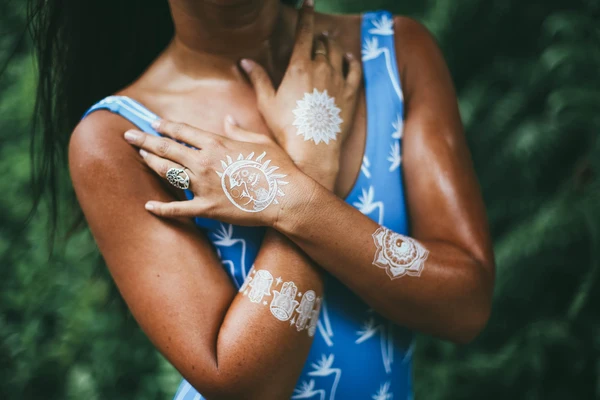
For an editorial reference, explore the Emily Deechaleune white collection, where pale, intricate forms turn the surrounding skin into an active part of the composition. Use that airy effect as a counterpoint to a solid black anchor rather than matching every detail.
The local market rewards this mix of wearable art and independent collaboration. Melbourne laneway pop-ups, Sydney design studios and Australian festivals often highlight hand-drawn work, while Pure Tatts’ seasonal releases and artist collaborations make new directions easy to find online. Keep a small palette so each new piece has room to belong.
Prepare the skin before arranging anything. Clean and fully dry the area, avoid moisturiser or oil on the application zone, and follow the instructions for pressure and drying time. Use a reference photo with the same angle as your body position, especially when placing two elements as a pair.
After application, resist adding another decal over a damp or warm patch. Detailed application, wear and removal guidance is available in Pure Tatts’ shopping FAQs, which is useful before testing delicate white linework or layering a matte black shape nearby.
Care changes with the Australian calendar. Pool chlorine, beach salt, gym heat and long sleeves can affect how a temporary tattoo looks, so treat wear time as flexible and remove it if the edges lift or the skin reacts. Store unused decals flat, away from direct sunlight, and never reuse a removed tattoo.
Start with a clear focal point, then build outward. Place the largest design where you naturally move or make eye contact, give it generous breathing room, and introduce one supporting detail at a time. The balance should feel obvious in a mirror without requiring every inch of skin to be decorated.
Check the arrangement in different light and against the skin tone you are wearing that day. White pigment, black linework and matte fills may need different gaps, and a look that feels balanced on one arm can become crowded on the ribs. Adjust scale before adding more pieces.
Style your own composition with Pure Tatts’ seasonal collections, featured designs and artist collaborations. Choose contrasting scales, leave enough room for every mark to breathe, and join the email list for new releases and member offers before your next trip, festival or everyday outfit.
Posted on
Posted on
Posted on

Posted on

Posted on

Posted on
Posted on