Temporary Tattoo Collection Donates 50% to Animal Rescue!
Posted on
Posted on
Posted on
Australia's professional landscape is famously relaxed, yet a quiet hierarchy still governs what employees can reveal between Monday standups and Friday knock-offs. The country trades on a "give it a go" attitude, but offices in Sydney's financial district, Canberra's public service corridors, and Perth's mining headquarters tend to favour conservative grooming standards. Temporary pieces slip neatly into this gap, offering artistic expression without the lifelong commitment that permanent ink demands.
The rise of hybrid work has loosened what Australians wear to the office, but it has also sharpened expectations around personal polish during in-person days. Many knowledge workers in Brisbane and Melbourne now split their week between home, a coworking hub, and a CBD meeting, and they want accessories that move with them. A short-term tattoo applied on Sunday night can still look crisp for Friday drinks, making the format practical for the modern roster.
This guide covers the placements, styles, and habits that work for Australian workplaces, alongside practical tips for application, longevity, and removal in our unique climate. Whether you're in a Parramatta law firm, a Fitzroy studio, or a Townsville council office, the rules below will help you wear temporary body art with confidence.
Each capital city carries its own professional temperature, and understanding the local feel is the first step toward picking a design that doesn't raise eyebrows. Sydney's CBD and North Shore corridors lean polished and structured, often interpreting the Australian Standard guidance on business attire as a minimum benchmark for grooming. Canberra's APS departments interpret conservative presentation more strictly, particularly for client-facing roles, while Perth's resources sector mirrors that caution. Melbourne sits looser, particularly in creative agencies around Collingwood and Cremorne, where visible self-expression tends to be welcomed.
Beyond geography, industry matters. Banking, law, government, and large corporate employers across Australia still default to visible tattoos being a personal choice made after hours, even where formal policies are unspoken. Creative agencies, hospitality venues, and tech startups often welcome ink of any permanence as long as it suits the brief. A short-term piece offers a useful middle ground, letting professionals in stricter sectors experiment quietly without committing to a forearm piece that might affect promotion conversations later.
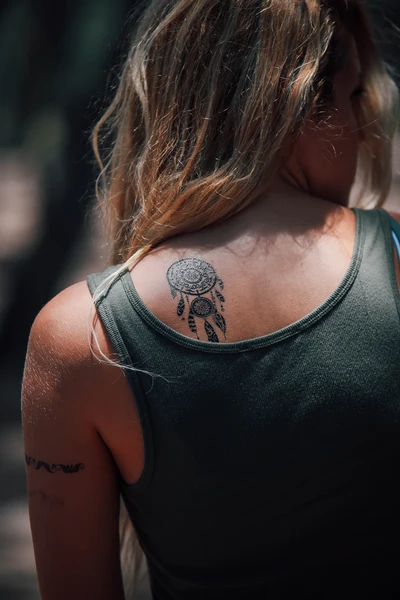
Placement decides almost everything about whether a piece flies under the radar. Wrists, inner forearms, and the side of the hand sit in plain sight during a handshake, making them risky for client-facing weeks in Parramatta or Brisbane's Eagle Street. Better choices include the upper shoulder, just inside a blouse or shirt collar, the nape beneath a low ponytail, and the ribcage covered by a loose knit. These spots give you full control over reveal, whether you're at a Barangaroo rooftop bar after work or a private dinner in South Yarra.
For warmer stretches across Queensland and Western Australia, three-quarter sleeves and open collars expose more skin than Melburnians might expect. A small motif tucked behind the ear, on the hip beneath a tucked shirt, or along the spine becomes visible only when you choose. Many Australians pair these placements with the rest of their workweek outfit, treating temporary body art like a watch or pearl studs. It stays hidden during a 9am inbox review and emerges at a Friday knock-off, which keeps the format versatile for hybrid schedules.
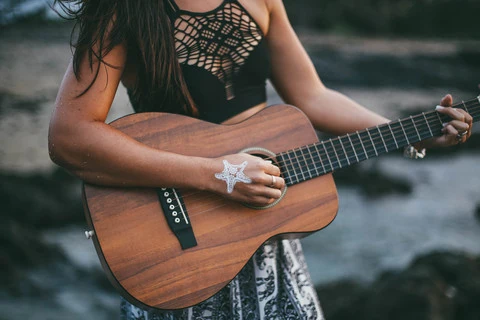
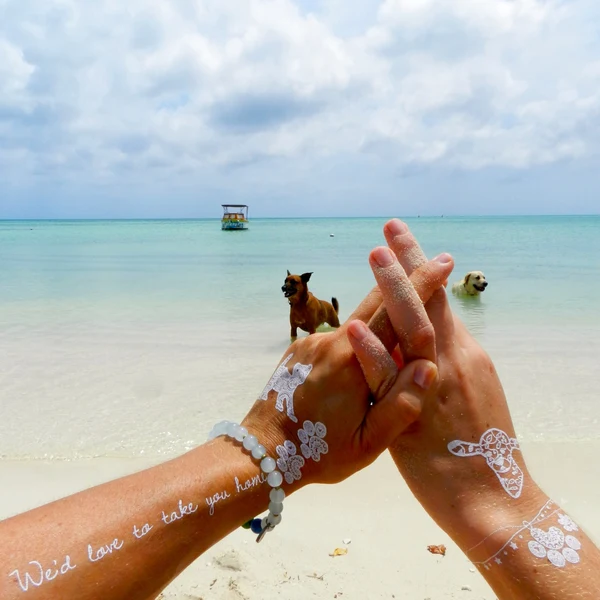
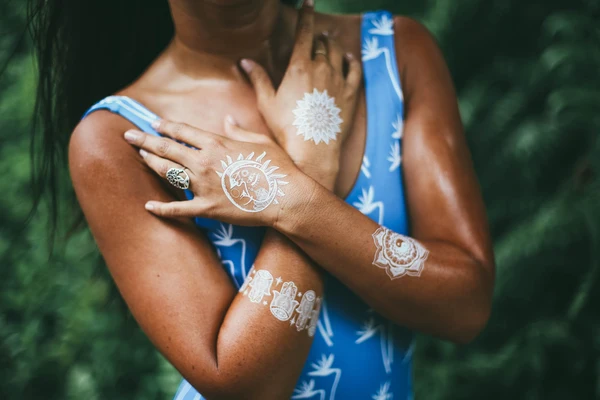
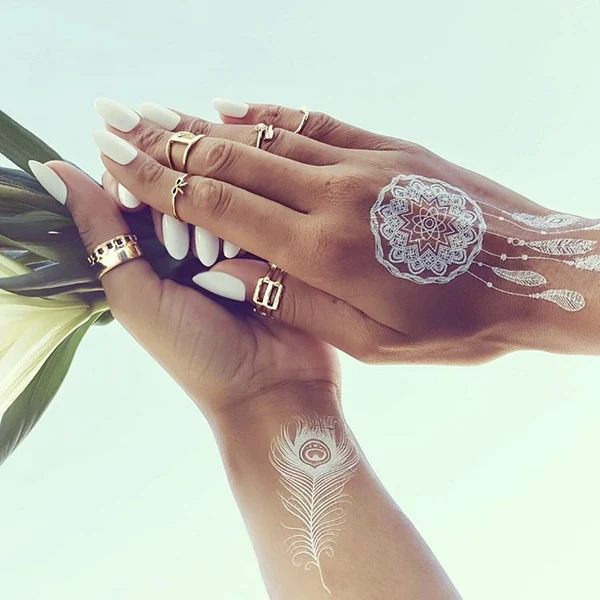
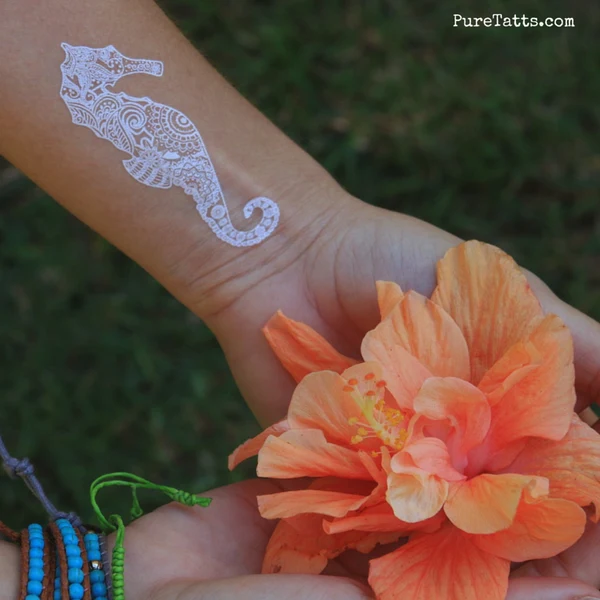
Fine line work, single-needle botanicals, and small geometric shapes tend to pass muster even in stricter Australian offices, particularly when they sit in monochrome. Black-and-white temporary designs mimic a custom illustration more closely than bolder colours, which helps them read as deliberate rather than decorative. White temporary tattoos work well against tanned or olive skin and disappear almost entirely under sheer sleeves, making them a discreet option for client-facing weeks in Brisbane or Perth. Editorial teams increasingly use these subtle styles in place of body art on cover shoots, as outlined in recent features in fashion magazines, which is a useful cue for anyone deciding what reads as boardroom-appropriate.
Avoid large script, dense tribal motifs, or anything that mirrors a gang, prison, or hate symbol, since these can create awkward conversations regardless of intent. A single dahlia stem along the inner wrist, a constellation behind the ear, or a slim mandala on the shoulder blade all read as thoughtful personal style. When paired with the right outfit, they look closer to a delicate bracelet than to anything that might draw a second glance from a manager.
Heat, humidity, and long commutes on air-conditioned trams can shorten the life of even the best temporary piece. Sweat lifts edges within hours, particularly along the inner elbow or behind the knee, where skin folds rub against fabric and chair arms. Sunscreen, which most Australians apply daily under the Slip Slop Slap tradition, can also break down adhesives faster than expected. Choosing flatter areas with less movement, like the upper arm, shoulder blade, or outer thigh, helps a piece survive a full working week in Brisbane's summer.
Removal is just as important as application, especially for last-minute client meetings. Most quality temporary tattoos lift cleanly with baby oil, micellar water, or a warm flannel soaked in coconut oil, leaving no residue on suits, blouses, or button-downs. Avoid scrubbing, which can irritate the skin and leave pink patches that look worse than the original design. A quick test patch on the inner wrist a day before a major meeting also helps avoid allergic reactions, particularly for sensitive skin that flares under the Australian sun.
A clean, dry surface is the foundation of a long-lasting piece, which means skipping moisturiser, deodorant, and SPF on the area for at least an hour before application. After pressing the design onto the skin, hold a damp cloth against it for thirty seconds rather than rushing the reveal. This gives the adhesive time to bond, extending wear from two days to closer to a week in dry, air-conditioned offices. For workers who commute by bike or walk from Central Station, sealing the edges with a thin layer of translucent powder helps prevent early lifting.
Pairing temporary ink with the rest of your wardrobe keeps the look considered. A small motif on the wrist pairs beautifully with a vintage watch, while a motif behind the ear sits well alongside bold earrings, and there are practical guides for pairing with statement earrings that translate well to office settings.
Most professionals only need three or four reliable designs to cover a working week, especially when seasons and client rosters change. Start with a single fine-line piece in a hidden spot, then add a geometric shape that works on the wrist or ankle for casual Fridays. Pair these with seasonal collections from Australian stockists, which often release fresh work around spring racing, summer holidays, and end-of-financial-year events. A modest rotation keeps the format fresh without overwhelming your weekly styling decisions.
Temporary ink also pairs well with the kind of styling with loungewear many Australians now treat as weekend uniform, particularly after long office weeks. Treat the body art like any other accessory, curating it around the season, the city, and the meeting calendar. With the right approach, even the most traditional Canberra or Sydney office can become a place where personal style quietly thrives between nine and five.
Browse the seasonal drops at Pure Tatts and subscribe for early access to new collections, member discounts, and limited artist collaborations that ship across Australia.
Posted on
Posted on
Posted on

Posted on

Posted on
Posted on
Posted on