Temporary Tattoo Collection Donates 50% to Animal Rescue!
Posted on

Posted on
Posted on
Black-and-white temporary tattoos depend on visual tension. The relationship between dark marks, pale surfaces, open skin, and fine detail gives a design its character, whether the result feels graphic, delicate, architectural, or quietly expressive. Without colour to create separation, every line and empty space has a greater visual responsibility.
For Australian wearers, this monochrome approach suits many settings, from a summer music festival in Sydney to a creative event in Melbourne or a weekend by the coast. Premium temporary designs offer a way to explore scale, placement, and personal style without committing to permanent ink, while contrast helps the image remain clear as it moves through changing light and everyday activity.
Contrast is the difference between light and dark elements within an image. In temporary tattoo design, it controls what the eye notices first. A dense black shape may become the focal point, while a white detail or bare area creates breathing room around it. Strong contrast can make a small tattoo look defined from a distance, while softer contrast gives a more subtle, jewellery-like impression.
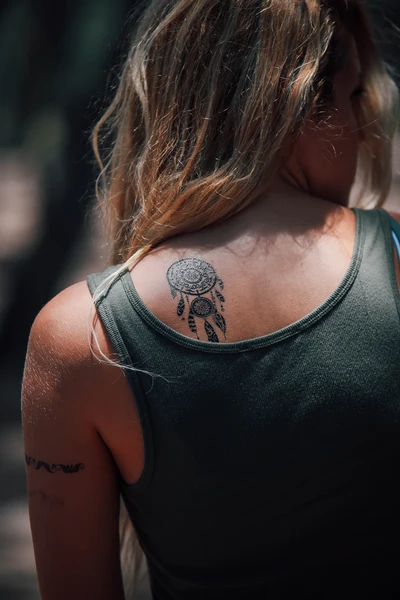
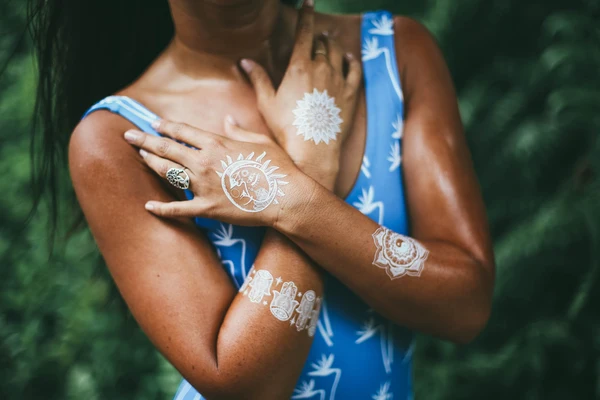
The surface beneath the tattoo matters as well. On lighter skin, matte black artwork tends to appear crisp and bold, while white details may create a more restrained effect. On deeper skin tones, white temporary tattoo designs can offer striking visibility, especially when the artwork uses clean shapes and sufficient spacing. The best choice depends on the design, application method, lighting, and the wearer’s desired level of impact.
Negative space is the uncovered area that forms part of a tattoo’s composition. It may appear between geometric lines, inside a botanical outline, or around a central symbol. This empty space is active rather than accidental: it separates shapes, improves legibility, and prevents intricate artwork from becoming a dark blur.
A successful monochrome design usually balances filled areas with open ones. If every section is heavily shaded, the tattoo can feel visually crowded. If there is too much empty space, the image may lose definition. Hand-drawn artwork often handles this balance particularly well because small irregularities can give the design movement while preserving a clear silhouette.
For a distinctive example, the Christina Seng edition shows how black-and-white artwork can feel considered and illustrative rather than generic. Artist-led details give contrast a more expressive role, allowing the relationship between bold marks and delicate elements to tell part of the story.
Line weight refers to the thickness and visual strength of a mark. Thick lines create authority and stability, while fine lines suggest precision, lightness, or fragility. Combining both gives the eye a path through the design. A heavier outline can establish the main form, with thinner interior lines adding texture and detail.
This hierarchy is especially important for temporary tattoos because the image may be viewed quickly. At a beach, outdoor market, or crowded concert, the tattoo needs a recognisable silhouette before its finer details become visible. A strong outer contour, carefully placed dark areas, and a few fine accents can make the design readable in bright Australian daylight.
Matte black finishes can intensify this effect by reducing shine and giving solid areas a velvety appearance. The result is often more graphic than glossy metallic or coloured transfers. It can pair easily with black clothing, silver jewellery, denim, or a simple white shirt.
Geometric tattoo styles rely on proportion, repetition, and alignment. Circles, grids, arches, triangles, and symmetrical marks become clearer when contrast distinguishes each component. A black framework against open skin can feel modern and architectural, while small white interruptions soften the structure and add visual rhythm.
Contrast also helps manage complexity. Repeated lines may look elegant when grouped into clear sections, but they can merge if the gaps are too narrow. Designers use alternating bands, outlined shapes, and controlled areas of solid black to keep the pattern legible. The same principle applies to abstract symbols: a simple dark form can anchor a composition filled with lighter, more delicate geometry.
Placement should support the motif. Long vertical designs may suit the forearm or calf, while compact geometric pieces can sit neatly near the ankle, shoulder, or upper back. A curved design may follow the natural movement of the collarbone or rib area rather than sitting as a rigid block.
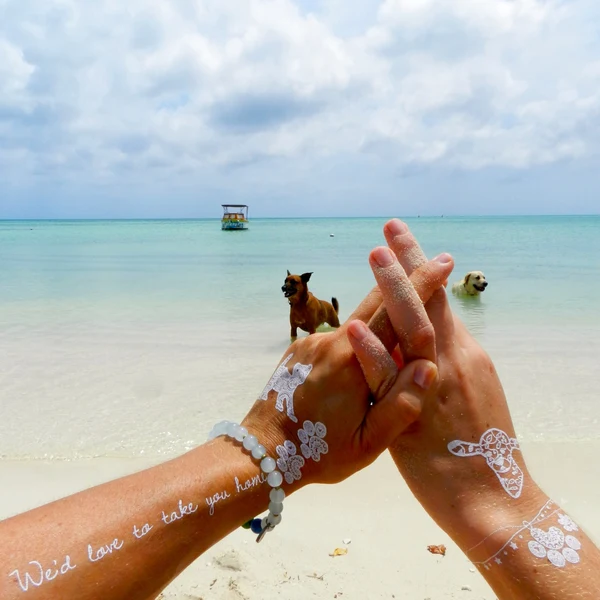
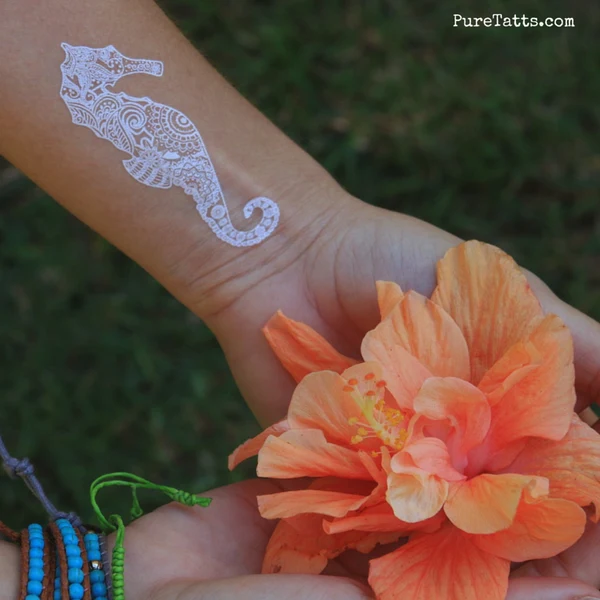
White temporary tattoos have a different visual presence from black designs. They can appear understated indoors and become more noticeable against tanned skin or darker clothing. In strong sunlight, however, glare and surrounding brightness may reduce definition. A white design with a clear outline or bold silhouette is generally easier to read than one made entirely from extremely fine marks.
Australia’s intense sun makes application and aftercare especially relevant. Sunscreen should be applied around the tattoo rather than directly over a fresh transfer unless the product instructions allow it, and prolonged exposure can affect how long the design remains crisp. Sweat, salt water, and friction from swimwear or sports clothing may also shorten wear time.
White artwork can be particularly effective for evening occasions, winter styling, and layered monochrome outfits. It may also work as a highlight within a predominantly black composition, where small pale details create sparkle without introducing colour.
Everyday habits influence how contrast is experienced. A tattoo on the wrist may be visible during a café visit in Brisbane but can fade faster if it is repeatedly washed or rubbed by a watch strap. A design on the upper arm may last better during office hours, while the ankle or foot can experience more friction from sandals, trainers, and walking.
Climate varies across the country. Humidity in Darwin and tropical Queensland can affect drying time, while dry heat in Adelaide or inland areas may make skin feel more dehydrated. Coastal activities in Perth, the Gold Coast, or Sydney introduce salt water and sand. Applying the transfer to clean, dry skin and following the brand’s instructions helps preserve sharp edges and tonal separation.
It is also useful to distinguish temporary body art from professional tattooing. Permanent tattoo studios operate under state and territory public health requirements, whereas a removable transfer is a consumer product. Australian Consumer Law still matters: product descriptions should be accurate, safety directions should be followed, and buyers should check ingredients for known sensitivities. Avoid applying any temporary tattoo to broken, irritated, or freshly sunburned skin.
The right level of contrast depends on the intended mood, placement, skin tone, and occasion. A bold black design may suit a festival or editorial outfit, while a white or finely lined piece can feel more discreet for work and everyday wear. Testing a smaller design first can help reveal how the transfer looks under indoor lighting, direct sun, and camera flash.
Removal should be gentle rather than abrasive. Rubbing hard can irritate the skin and may leave it feeling dry, especially after exposure to sun, sweat, or salt water. A clear gentle removal guide can help wearers take off a temporary tattoo while protecting the surrounding skin.
| Design approach | Contrast level | Visual character | Suitable placement |
|---|---|---|---|
| Matte black silhouette | High | Bold, graphic, easy to read | Forearm, shoulder, calf |
| Fine black linework | Medium | Delicate, artistic, detailed | Wrist, collarbone, upper arm |
| White temporary tattoo | Soft to medium | Subtle, luminous, understated | Shoulder, upper back, darker clothing |
| Black and white composition | High with highlights | Layered, expressive, dimensional | Upper arm, back, chest |
| Geometric pattern | Medium to high | Structured, modern, architectural | Forearm, ankle, rib area |
When contrast is treated as a design tool rather than a simple black-versus-white choice, temporary tattoo artwork becomes more versatile. Explore Pure Tatts’ artist-created collections, compare matte black, white, and geometric styles, and choose a design whose contrast complements your skin, wardrobe, and Australian routine.
Posted on
Posted on
Posted on

Posted on

Posted on

Posted on
Posted on