Temporary Tattoo Collection Donates 50% to Animal Rescue!
Posted on

Posted on
Posted on
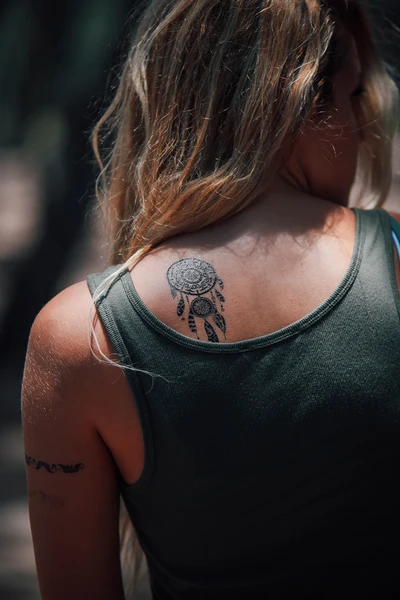
Layering a white temporary tattoo over a matte black one creates a surprisingly dimensional monochrome look. The dark design becomes a graphic base, while the smaller white motif reads like a highlight, making simple shapes feel richer and more intricate.
Because temporary tattoos are forgiving, you can experiment with scale and placement without making a permanent commitment. The result works best when the contrast is deliberate: choose compatible shapes, prepare the skin properly, and allow each layer to settle before adding the next.
Matte black temporary tattoos already have the bold presence of ink, ink or stencil art. Adding a white design across part of that darker shape creates an optical interruption, almost like a gleam across a shadow. This gives the eye both a strong outline and a smaller focal detail.
The effect does not depend on perfectly matching every edge. A slightly offset white element can feel more dimensional than a rigidly aligned one because the overlapping shapes appear to sit on different planes. Fine linework, dots, lace-like details and small geometric fragments are especially effective over a solid matte black base.
Clean, dry skin gives both temporary tattoos the best chance of adhering evenly. Avoid lotions, deodorant, oils and heavy sweat on the application area, and shave or groom around the design if necessary. A small patch test is sensible for sensitive skin, and tattoos should never be placed over broken, irritated or recently treated skin.
Australian summers make preparation especially important because sunscreen, moisture and heat can affect adhesion. If you use sunscreen, apply it first and allow it to absorb before placing a tattoo; later, refresh protection around the design without rubbing the edges. For shape ideas, the geometric tattoo inspiration collection offers a useful starting point for choosing complementary black and white elements.
Begin with the matte black tattoo, as its solid shape provides the strongest foundation for the white overlay. Position it before removing the backing, checking the proportions against the intended area of skin. The base can sit on the wrist, forearm, shoulder, collarbone or upper body, depending on how bold you want the finished artwork to appear.
Press the design into place and hold it for the period stated on its packaging. Let the matte black layer dry completely, then gently press any raised edges with clean fingers. Avoid repeated rubbing, which can blur the shape or lift the transfer before it has settled.
Keep most of the white motif within the darker tattoo, but allow a few lines or shapes to extend beyond its edge. That controlled overlap makes the two pieces look connected while preserving their individuality. If the white design is almost the same size as the black base, it can cover too much of the contrast and lose the layered effect.
For broad black shapes, choose a smaller white accent with plenty of negative space. Fine curves work well over straight geometric forms, while angular fragments can energise a softer lace or botanical pattern. Follow the natural curve of the body rather than forcing a flat design into a sharply rounded area.
Melbourne’s famously changeable weather makes monochrome body art easy to incorporate into a layered outfit. A matte black base and white highlight can sit beneath a shirt, jacket or sheer sleeve, appearing and disappearing as the layers shift throughout the day.
Sydney’s harbour beaches, pool culture and warm coastal air create plenty of opportunities for temporary tattoos, although salt water and frequent perspiration may shorten their wear time. Brisbane’s humid summer is another useful test: choose a smaller design, let it set properly and carry a replacement in your bag for festivals, gigs or long days outdoors.
Australian music festivals, Pride events and design markets also provide a creative setting for expressive, hand-drawn body art. Choose a geometric or abstract combination that feels personal rather than copying culturally specific symbols, and check local event rules before heading out.
The three main approaches offer different levels of boldness, subtlety and effort. A combined design provides the richest visual depth, while single-colour tattoos can be quicker to apply and easier to reposition.
| Finish | Visual effect | Best suited to | Practical consideration |
|---|---|---|---|
| Matte black only | Bold, graphic and strongly defined | Statement shapes and minimalist outfits | The simplest option to position and maintain |
| White only | Airy, delicate and intricately detailed | Fine linework and subtle contrast | Best where the design can remain undisturbed |
| White over matte black | Highlights, shadows and the strongest illusion | Artistic layering on flat skin | Requires precise placement and extra drying time |
Combined layering works best with restrained proportions: one dominant black shape, one smaller white accent and enough exposed skin between them to preserve clarity. This balance keeps the tattoo sophisticated rather than visually crowded.
A successful two-tone tattoo depends more on preparation than on expensive products. Keep the selected designs close, test their alignment and work in good lighting before touching the skin. The following routine helps preserve the contrast between the matte black base and the white overlay.
If an edge begins to lift, avoid pulling at it and follow the product’s removal and care directions. Water, friction and lotions can affect how long the layered effect lasts, so applying the tattoos shortly before an event usually gives the cleanest finish.
Create your monochrome look by choosing the matte black foundation, adding a deliberate white highlight and allowing both to settle. Explore the Pure Tatts collection for hand-drawn geometric, white and matte black temporary tattoos, then build a layered design that turns contrast into depth.
Posted on
Posted on
Posted on

Posted on

Posted on

Posted on
Posted on