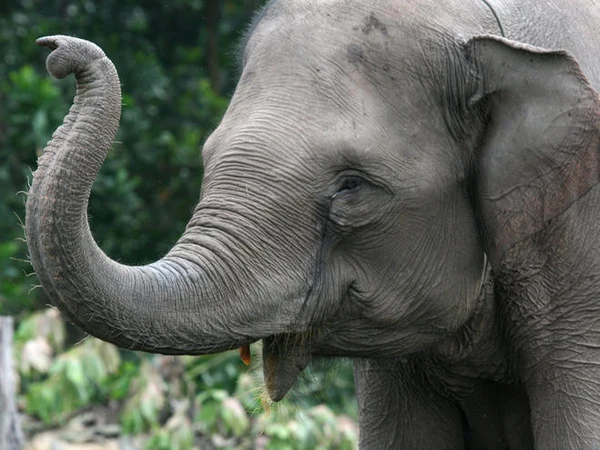
Temporary Tattoo Collection Donates 50% to Animal Rescue!
Posted on
Posted on
Posted on
A job interview in a creative field rarely follows a single dress code. A design studio in Melbourne may welcome visible self-expression, while a corporate agency in Sydney expects polished restraint. Temporary tattoos can help you show taste and personality, provided they support your presentation rather than becoming the main thing the panel remembers.
For Australian applicants, the right choice depends on the role, workplace and interview format. A small geometric mark may feel at home in a branding studio, while a discreet white tattoo can add interest during a portfolio review without competing with your work. The aim is to look considered, comfortable and ready to contribute from day one.
Research the company’s visual language before selecting a temporary tattoo. Look at its website, social media, staff portraits and current campaigns. A creative agency with bold art direction may suit an expressive matte-black symbol, whereas a UX consultancy with a minimal interface style may call for a fine, restrained design.
Location can also offer useful clues. Studios around Melbourne’s Collingwood, Fitzroy or Cremorne precincts often have a relaxed, design-led atmosphere, while a major Sydney agency in the CBD may lean towards sharp smart-casual presentation. Neither setting has a universal rule, so treat the workplace’s actual culture as more important than stereotypes.
For video interviews, remember that your camera crops out much of your outfit. A tattoo on the forearm or hand may appear more prominently than intended, especially in a close webcam frame. Test your lighting and camera position before the interview so the design looks intentional rather than distracting.
Different creative jobs invite different visual signals. An illustrator, art director or fashion stylist can usually take a more experimental approach, particularly when the tattoo reflects a strong personal aesthetic. A small abstract form, architectural linework or hand-drawn botanical motif can suggest visual awareness without looking like a costume.
For copywriting, account management or production roles, moderation may be more effective. Choose a design that hints at creativity while keeping attention on your communication skills. A minimal black triangle, orbit, eye or abstract brushstroke can work well with a plain shirt, structured jacket or clean knit.
Client-facing positions require another layer of judgement. If the agency works with conservative finance, government or legal clients, cover the tattoo for the interview unless you know visible body art is accepted. Creative workplaces can be casual internally while still presenting a polished appearance to clients.
Placement is one of the easiest ways to adjust how visible a temporary tattoo feels. The inner forearm can be shown with rolled sleeves and covered with a blazer. The upper arm, shoulder or rib area gives you creative freedom without placing the design in the panel’s direct line of sight.
Hands, fingers and the neck send a stronger signal because they remain visible through most outfits and gestures. They may suit a role where personal style is central, but they can be a risk for a first meeting. A hiring manager should be thinking about your portfolio, not wondering whether the mark is permanent.
Consider the practical conditions of an Australian interview day. A Brisbane summer can make heavy layers uncomfortable, and a warm Perth afternoon may encourage short sleeves. Select placement that works with the season, then carry a light overshirt or jacket if you need a quick change before entering the building.
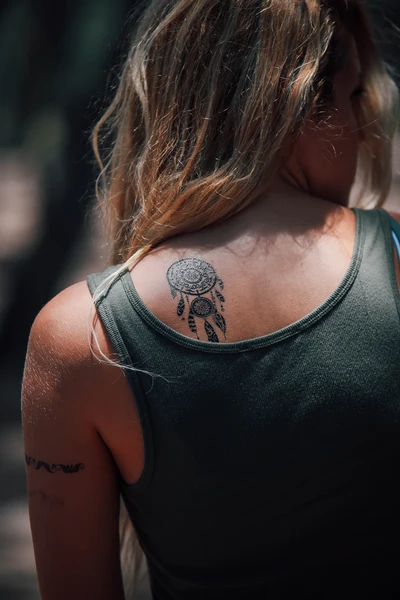
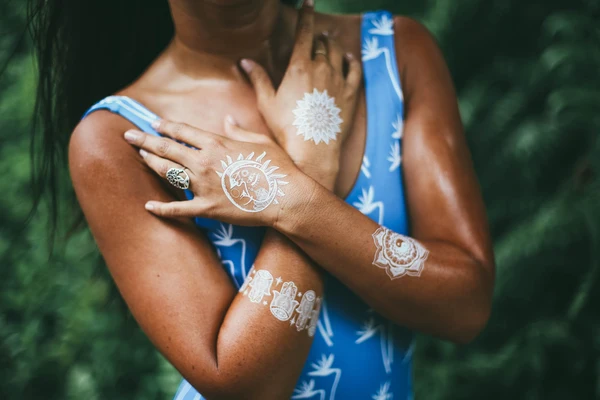
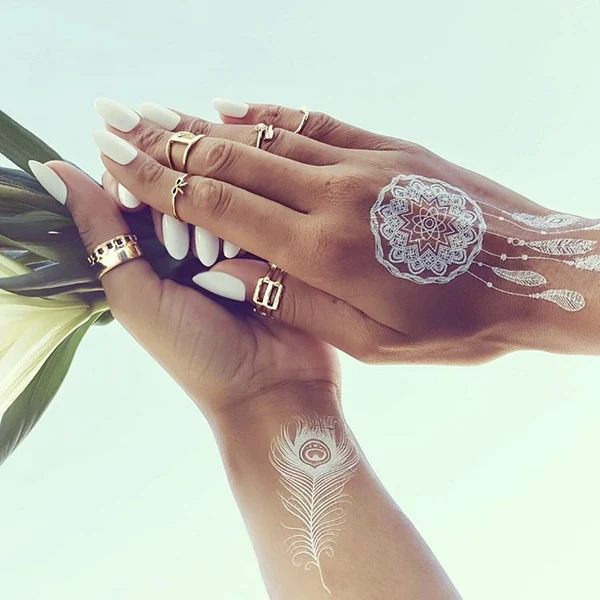
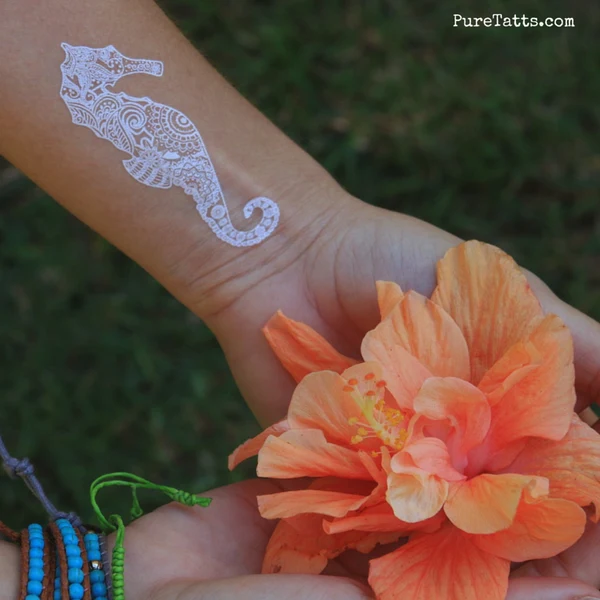
Black-and-white temporary tattoos are particularly useful for interviews because they can look graphic, editorial and deliberate. Matte black designs pair neatly with monochrome clothing, denim, silver jewellery and clean sneakers. White tattoos create a subtler effect on darker skin tones and can work beautifully against black sleeves or a deep-coloured top.
Keep the overall visual story simple. If your outfit includes a bold print, colourful shoes or statement earrings, choose one quiet tattoo rather than several competing motifs. If your clothes are neutral, two small related designs can create a more distinctive look while remaining professional.
You can also create depth with several coordinated pieces instead of relying on one oversized image. This gradient tattoo effect approach can be useful for a portfolio presentation or studio visit, where an artful arrangement feels more natural than a single dramatic statement.
Apply the tattoo at least a day before the interview. This gives you time to check for irritation, placement problems or unexpected rubbing from a sleeve, watch or bag strap. Premium temporary tattoos should look crisp, but application still depends on clean, dry skin and careful positioning.
Take photographs in natural light and under the lighting you expect to use. White ink can appear softer on camera, while matte black may look stronger under office fluorescents. If you are interviewing remotely from a home office, make sure your design does not become a high-contrast distraction in the small video window.
Avoid applying a new tattoo immediately before leaving. Sweat, sunscreen and hurried application can affect the finish, particularly during a hot commute on Melbourne’s tram network or a walk across central Sydney. Give the design enough time to set, and keep a spare piece available only if you are confident it will apply cleanly.
A temporary tattoo should support the impression you want to create: observant, imaginative and aware of context. It should never imply that you expect special treatment or that style matters more than reliability. If the panel notices it, a simple comment about the artist, motif or design process is enough; then return the focus to your experience.
Cultural meaning deserves care as well. Avoid using Indigenous Australian symbols, motifs or visual language as decoration unless you have permission and a genuine connection to the work. A geometric tattoo inspired by generic architectural forms is safer than borrowing a culturally specific pattern without understanding its significance.
Small styling adjustments can change the result. Explore these styling hacks for combining placement, clothing and accessories, then edit the final look as carefully as you would edit a portfolio case study.
The strongest creative-industry interview look feels authentic without appearing rehearsed. A graphic designer might use a sharp monochrome mark, a stylist may choose a more editorial placement, and a junior applicant can make an equally strong impression with a tiny, well-positioned detail.
For applicants in Australia, flexibility is especially valuable. A studio may invite you to a casual coffee in Surry Hills, a formal panel may meet you in a tower near Martin Place, or a regional team may interview entirely online. A design that can be revealed or covered gives you control across each setting.
Browse Pure Tatts’ artist-created black, white and matte-black designs to find a temporary piece that reflects your creative point of view. Apply it thoughtfully, pair it with a considered outfit and walk into the interview with your work, judgement and personality leading the conversation.
Posted on
Posted on
Posted on

Posted on
Posted on
Posted on
Posted on