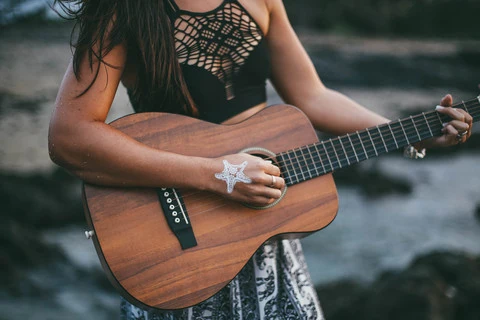
Temporary Tattoo Collection Donates 50% to Animal Rescue!
Posted on

Posted on
Posted on
A sleek interior photo shoot depends on restraint. Clean lines, carefully chosen materials, and controlled light create a visual language where every detail matters. Temporary tattoos can support that language by adding a precise human element without distracting from the room, furniture, or styling.
Black-and-white body art works especially well against concrete, pale plaster, brushed metal, dark timber, and soft upholstery. A small geometric mark can echo architectural angles, while a white design can introduce a quiet highlight on warm or shadowed skin. Since the artwork is temporary, it also allows a creative team to adapt the look to several scenes during one production.
The strongest results come from treating the tattoo as part of the composition rather than an isolated accessory. Placement, finish, scale, and contrast should all relate to the interior’s visual character. With a considered approach, temporary ink can make a lifestyle image feel more editorial, personal, and complete.
Before selecting a design, identify the dominant qualities of the space. A minimalist apartment with glass, steel, and pale surfaces calls for fine-line geometry or a compact symbol. A darker room with walnut cabinetry and sculptural furniture may suit matte black artwork with stronger visual weight.
Look for repeated forms in the setting. Arched doorways, linear shelving, circular lighting, and grid-like windows can all inform the tattoo choice. This creates subtle continuity between the model and the environment, helping the body art feel integrated into the photograph instead of added at the last minute.
The color palette matters just as much. Black ink offers crisp contrast against light clothing and neutral walls, while white temporary tattoos can sit beautifully on darker skin tones or add a refined flash of brightness under directional lighting. Monochrome designs keep the image sophisticated and prevent the tattoo from competing with accent colors in the room.
A close crop can make a small tattoo feel prominent, particularly when the model’s hand rests on a countertop or their shoulder appears beside a statement chair. For detail-oriented images, delicate linework and compact geometric designs often provide enough interest without overwhelming the frame.
Wider photographs need stronger silhouettes. A medium-sized design on the forearm, upper back, shoulder, or rib area can remain visible when the model is photographed within the full room. Consider how much skin will be exposed and whether the artwork will remain readable from the intended shooting distance.
The design should also work across movement. A mark that looks balanced on a relaxed arm may distort when the model reaches toward a lamp or leans against a wall. Test the tattoo in several poses before styling begins, especially if the shoot includes candid gestures or product interaction.
Placement is a powerful way to connect body art with architectural framing. A tattoo along the wrist can align with a horizontal table edge, while a design on the shoulder may mirror the curve of a lounge chair. Small details become especially effective when they sit near objects with similar shapes or directional lines.
For images featuring open backs, low-rise styling, or sculptural silhouettes, explore lower-back placement ideas that can follow the body’s natural curve. The goal is not to make the tattoo the central subject, but to create a controlled detail revealed by posture, fabric, or camera angle.
Hands, wrists, and necklines are useful locations for editorial portraits and close-ups. They naturally enter the frame when a model adjusts a cushion, holds a ceramic cup, or interacts with a cabinet handle. For a stronger fashion-led mood, bold wrist designs can add definition while keeping the rest of the styling restrained.
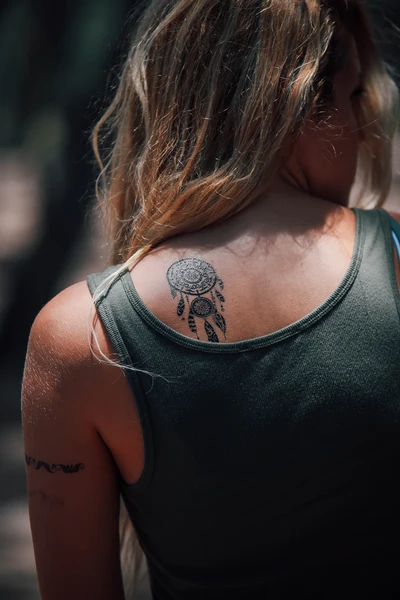
Matte black temporary tattoos are a natural choice for high-contrast interiors. Their low-sheen finish avoids unwanted reflections and gives the design a graphic, almost architectural presence. They work particularly well with black clothing, charcoal upholstery, dark stone, and dramatic side lighting.
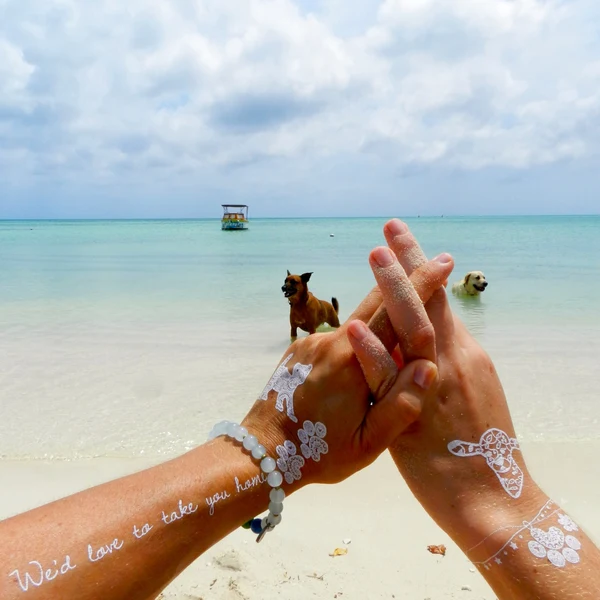
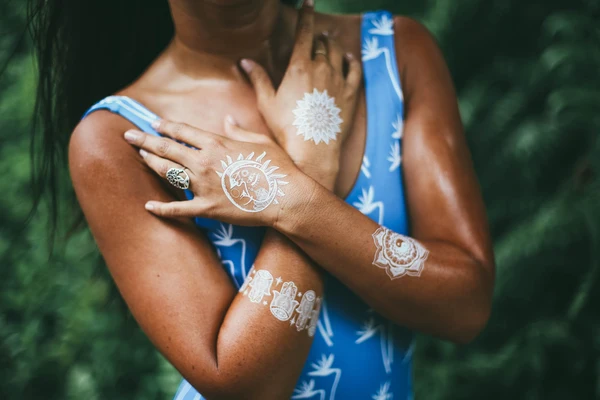
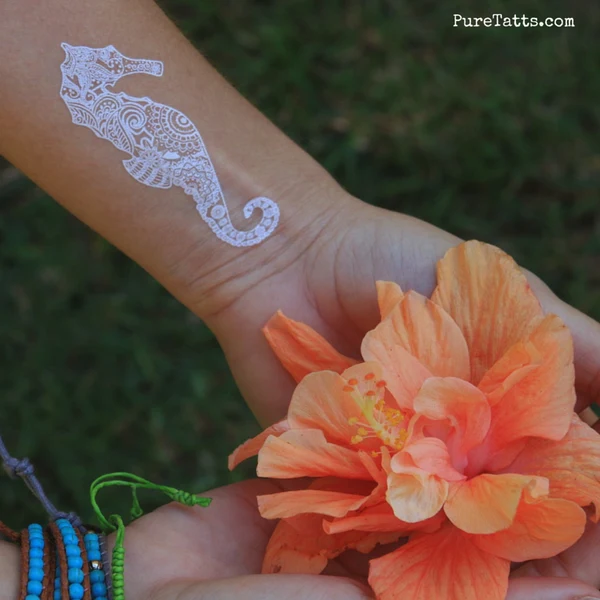
White tattoos create a different effect. Under soft daylight, they can appear subtle and elegant; under a focused light, they may become a deliberate highlight. Place them where the light can skim across the skin without flattening the design. A white mark on the collarbone, forearm, or upper back can complement pale walls while still remaining visible in a carefully exposed image.
Detailed hand-drawn artwork adds warmth to a modern setting. Fine irregularities prevent the image from feeling overly digital or sterile, which is useful when the room itself has a highly polished finish. Always check the tattoo under the actual lighting setup, since reflective surfaces and color temperature can change how black and white designs appear.
| Tattoo Style | Best Interior Pairings | Visual Effect | Ideal Placement |
|---|---|---|---|
| Fine-line geometric | Glass, steel, pale plaster | Precise and understated | Wrist, forearm, shoulder |
| Matte black | Walnut, charcoal, stone | Bold and sculptural | Upper arm, neck, back |
| White ink effect | Cream, beige, soft daylight | Quiet and luminous | Collarbone, upper back, forearm |
| Organic hand-drawn | Linen, timber, ceramics | Artistic and human | Rib area, shoulder, ankle |
Wardrobe should give the temporary tattoo enough breathing room. Sleeveless tops, rolled cuffs, open backs, and clean necklines help the design read naturally. Avoid placing complex artwork beneath busy prints or heavily textured garments unless the image is intentionally maximalist.
Props can reinforce the tattoo without making the connection obvious. A black ceramic vase may echo a dark mark, while a curved mirror can repeat the shape of an organic design. Books, sculptural objects, and architectural lighting should remain supporting elements rather than competing focal points.
For seasonal or atmospheric shoots, the artwork can introduce a controlled change in mood. A carefully selected spooky tattoo idea could suit a moody autumn interior with smoked glass and candlelight, provided it is treated as a design accent rather than a costume detail. The same principle applies to festive, celestial, or nature-inspired collections.
Temporary tattoos are easy to apply, but preparation still affects the final image. Skin should be clean, dry, and free from oil, body lotion, and excess shimmer. Apply the design before dressing when possible, allowing enough time for it to set before the model begins moving around the space.
Keep spare sheets available for reshoots, alternate placements, or unexpected smudging. Photograph the selected designs on the model during the lighting test, then review them at the same resolution and crop used for the final images. This reveals whether fine details disappear or whether a bold mark draws too much attention.
A short checklist can keep the styling process focused:
The best temporary tattoos for modern interior photography feel intentional but effortless. They give the viewer a small point of discovery: a graphic line beside a sleeve, a pale symbol catching the light, or an organic mark that softens a severe architectural setting.
Before the shoot, assemble a compact selection of geometric, white, matte black, and artist-created designs, then test each one against the room and wardrobe. Explore Pure Tatts collections to find temporary artwork that gives your next interior story a polished human detail without compromising its clean, modern character.
Posted on
Posted on
Posted on

Posted on

Posted on

Posted on
Posted on