Temporary Tattoo Collection Donates 50% to Animal Rescue!
Posted on

Posted on
Posted on
A seasonal tattoo collection begins long before the first design appears on a product page. At Pure Tatts, the process starts with a mood: a particular light, texture, landscape, or cultural detail that can translate into a striking piece of temporary body art. The goal is to create designs that feel connected to the season while remaining wearable, expressive, and unmistakably artistic.
Black-and-white temporary tattoos offer a distinctive creative space. Without a broad color palette, every line, shadow, gap, and contour matters. A geometric symbol may need precise balance, while a hand-drawn botanical motif can depend on delicate irregularity. Each new release is shaped by these contrasts.
Behind the scenes, artists and the brand team move through research, sketching, editing, testing, and presentation. The finished collection may look effortless, but every tattoo reflects hundreds of small decisions about scale, placement, texture, and mood.
The first stage is gathering references. Artists may look at frost-covered branches, sun-warmed stone, coastal shadows, architectural details, textiles, or the changing shapes of leaves. These references do not become direct copies. Instead, they establish a visual vocabulary for the collection.
A winter release might explore crisp symmetry, star-like geometry, and fine lines that resemble ice crystals. A summer edit could feel looser, using abstract waves, celestial marks, or bold matte black forms. The strongest seasonal concepts suggest a time of year without relying on obvious symbols.
The team also considers how the collection will sit alongside existing Pure Tatts designs. A new drop should feel fresh while preserving the brand’s balance of minimalism, detail, and monochrome drama. This is where mood boards become useful: they reveal whether the concept feels cohesive before detailed artwork begins.
Once the direction is clear, artists begin developing individual motifs by hand. Some start with pencil, ink, or brushwork, while others use digital tools after creating physical marks. Hand-drawn imperfections are valuable because they give a design warmth and movement that perfectly uniform graphics may lack.
A sketch is then refined for the realities of temporary tattoo printing. Very fine lines must remain visible, open areas need enough space to read clearly, and intricate details must hold together when transferred to skin. A beautiful illustration is not automatically a successful temporary tattoo; it needs to work at a practical size.
Scale testing is especially important for geometric and white tattoo styles. A design that looks balanced on a screen may become crowded when reduced. Artists compare several versions, adjust line weights, and examine how each motif behaves against different skin tones and body contours.
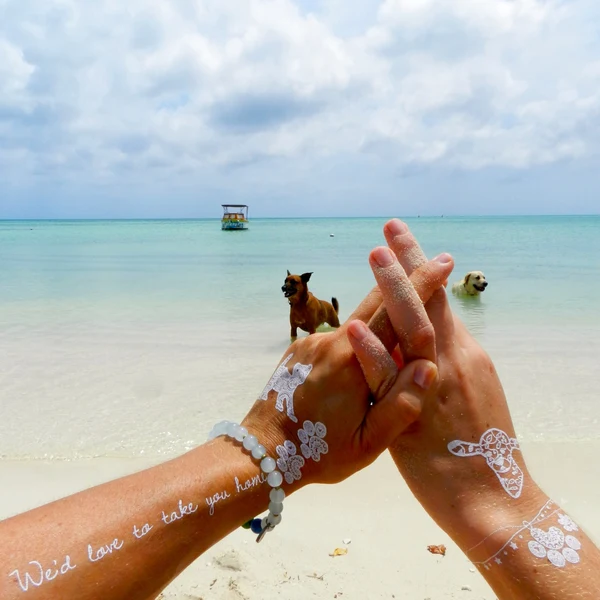
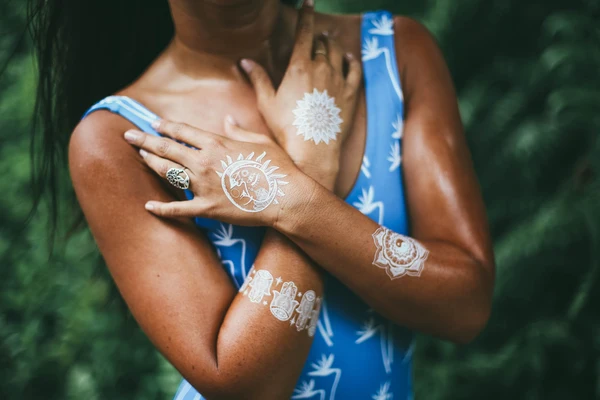
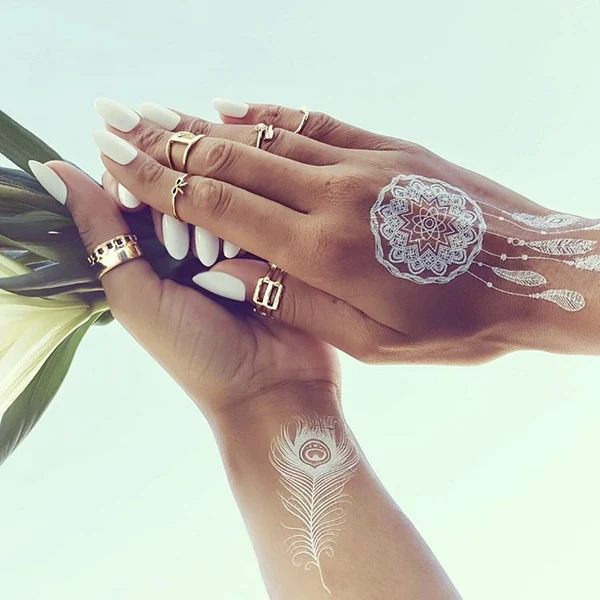
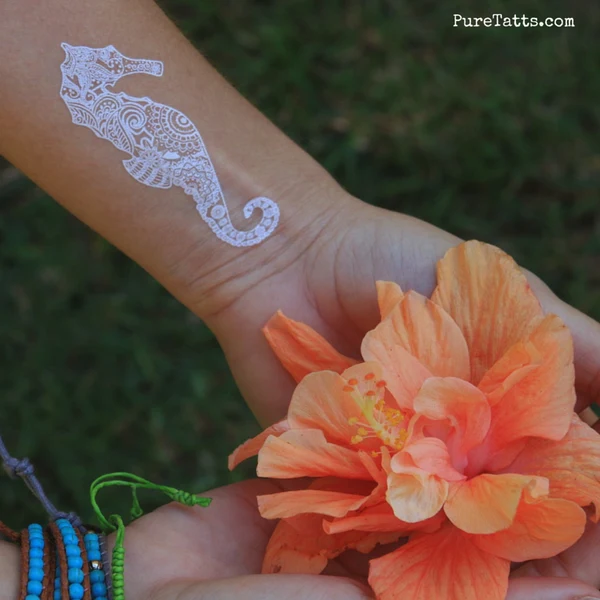
The collection’s visual balance often depends on contrast between tattoo styles. Matte black pieces create a strong, graphic impression and can anchor a set of lighter designs. White temporary tattoos offer a subtle, unexpected finish, especially on deeper skin tones or for editorial photography. Geometric tattoos bring structure through symmetry, repetition, and carefully measured spacing.
| Style | Visual Character | Best Design Approach | Common Placement Effect |
|---|---|---|---|
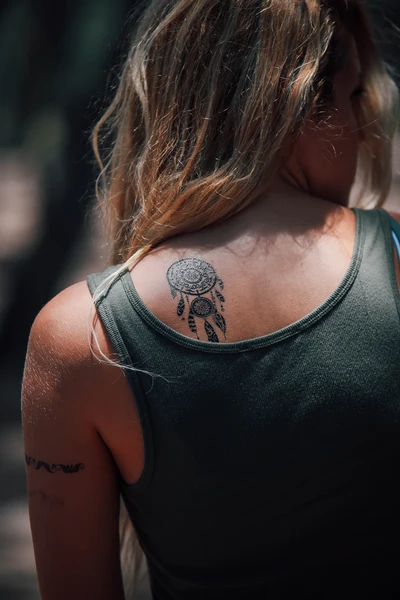
| Matte black | Bold, graphic, confident | Solid shapes, strong contours, simplified detail | Creates an immediate focal point |
| White | Soft, luminous, understated | Fine symbols, delicate linework, open compositions | Feels subtle and decorative |
| Geometric | Precise, modern, balanced | Repetition, symmetry, grids, angular forms | Follows the body with visual rhythm |
| Hand-drawn | Organic, expressive, personal | Irregular lines, botanical forms, artistic textures | Adds movement and individuality |
These categories are not rigid. A single seasonal design may combine a hand-drawn edge with geometric structure or use a white motif inspired by a traditionally bold black silhouette. Exploring those intersections helps a collection feel varied without becoming disconnected.
The team also thinks about styling beyond the tattoo itself. Jewelry, clothing, makeup, and photography can change how a design is perceived. A small white symbol may be perfect for an understated everyday look, while a broad matte black piece may suit a dramatic evening editorial.
After digital refinement, sample tattoos are produced for physical testing. This stage reveals details that are difficult to judge on a monitor. The transfer may look lighter than expected, a narrow gap may disappear, or a large motif may need repositioning to follow the body naturally.
Application tests also examine durability, finish, and clarity. The team studies how the tattoo looks immediately after application and after ordinary movement. For reliable results, the skin must be clean and dry, and the design should be pressed firmly during transfer. Pure Tatts shares a practical application guide for achieving a clean, even finish at home.
Different placements create different design demands. A shoulder can support a sweeping composition, while a wrist or ankle may call for a compact symbol. The curve of a collarbone, the movement of a forearm, and the natural width of a ribcage all influence how a motif should be shaped.
A seasonal launch needs more than a group of attractive individual tattoos. It needs a clear relationship between pieces. Repeated angles, shared line weights, related symbols, or a consistent balance of negative space can connect designs across the collection.
The editing process is often where the identity becomes strongest. Artists may remove a technically impressive design because it competes with the central pieces or feels out of step with the intended mood. Restraint keeps the final assortment focused and makes each tattoo easier to style.
Presentation plays a major role as well. Product photography, close-up details, model styling, and campaign backgrounds should communicate the same atmosphere as the artwork. For collections intended for fashion content or creative production, photo shoot styling can show how temporary tattoos contribute to a complete visual concept.
Before release, the team reviews every design through both an artistic and customer-focused lens. The artwork must feel distinctive, but it should also be easy to understand, apply, and wear. A seasonal collection succeeds when customers can see how a piece might fit into their own style rather than viewing it as something reserved for a campaign image.
This final review may involve comparing alternate versions, checking product descriptions, and deciding which designs deserve featured placement. The collection’s story should be clear through its imagery and language, while leaving enough room for personal interpretation.
The creative approach reflects the values behind Pure Tatts: artist-led designs, considered details, and temporary tattoos that allow people to experiment. Because the artwork is temporary, customers can explore a bold visual idea without committing to it permanently.
A new collection becomes more versatile when its designs can move between subtle daily wear and expressive styling. Consider these approaches:
The most rewarding part of designing a new seasonal collection is seeing a studio concept become part of someone’s personal expression. A sketch inspired by architecture, nature, or changing light can take on an entirely new meaning when it is worn for a night out, a creative project, a holiday, or an ordinary day.
Explore the latest Pure Tatts designs and choose a piece that fits your mood, your styling plans, or the season you want to carry with you. Apply it, photograph it, layer it, and make the artwork your own.
Posted on
Posted on
Posted on

Posted on

Posted on
Posted on
Posted on