Temporary Tattoo Collection Donates 50% to Animal Rescue!
Posted on

Posted on
Posted on
A tattoo does not need to be mirrored across the body to feel intentional. When artwork appears on one side only, the open space becomes part of the design. The result can feel modern, editorial, and quietly expressive rather than overly arranged.
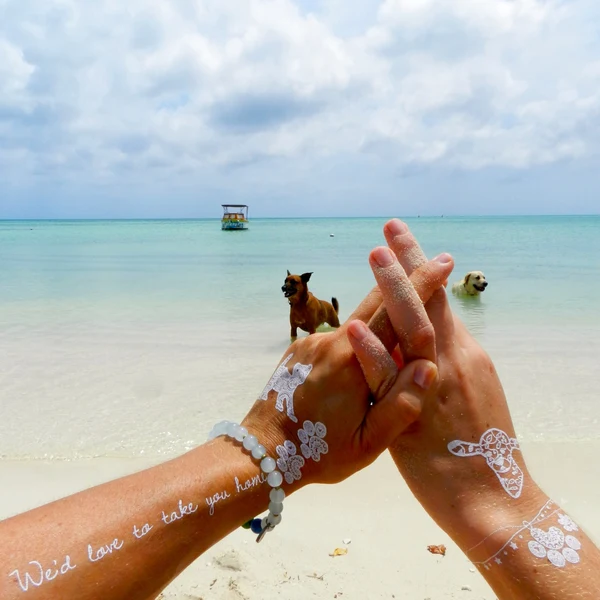
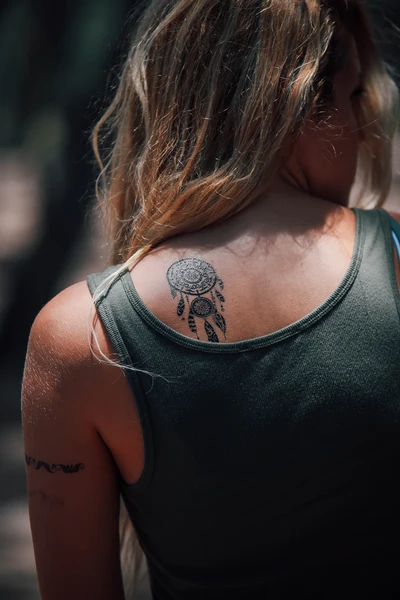
Asymmetrical placement draws attention through contrast. A detailed black tattoo on one forearm, a white design near one collarbone, or a geometric piece along one calf creates a visual pause that lets the artwork stand apart. Temporary tattoos make this approach especially easy to explore because placement can change with your outfit, mood, or plans.
The most successful one-sided arrangements balance three elements: the shape of the body, the scale of the design, and the direction in which the eye naturally moves. With a little planning, a single temporary tattoo can become the focal point of an entire look.
Symmetry often feels formal because matching details create predictability. Asymmetry introduces movement. A design placed on the left shoulder, for example, can lead the eye diagonally toward the center of the body, while a tattoo on one ankle adds a low, unexpected point of interest.
This effect works particularly well with hand-drawn artwork and fine geometric lines. The lack of a matching tattoo gives the design room to breathe. Instead of competing with a duplicate, it becomes a visual signature—small or dramatic, depending on the scale and location.
One-sided body art also adapts naturally to personal style. It can appear minimal with a sleeveless top, discreet beneath a cuff, or bold against a simple monochrome outfit. The placement changes the mood without changing the artwork itself.
There is no universal rule for choosing the left or right side. Consider which side is most visible in your usual clothing, which hand you use most often, and where accessories already create visual weight. A tattoo on the opposite arm from a watch or stack of bracelets may create a pleasing counterbalance.
Your natural gestures can guide the decision too. If you often gesture with one hand, a tattoo there will become part of your movement and conversation. If you prefer a quieter effect, place it on the less active side or in an area revealed only when you roll up a sleeve.
Think about photographs and daily routines as well. A side-facing tattoo can look striking in profile, while a design on the outer forearm will be easier to see in relaxed, everyday positions. Browse individual tattoo packs when you want to test one specific design before building a larger visual story.
The best placement follows the body rather than fighting it. Long, narrow designs suit the forearm, ribs, shin, and side of the calf. Circular motifs can sit neatly on the shoulder, upper arm, hip, or outer ankle. Angular geometric tattoos often look especially sharp on flatter areas where their edges remain clear.
Scale matters just as much. A tiny symbol on a broad upper arm may disappear, while an oversized piece on the wrist can feel crowded. Temporary ink lets you experiment with proportion before committing to a full look, so try moving the design slightly higher, lower, inward, or outward.
| Placement | Visual effect | Design styles that suit it | Styling note |
|---|---|---|---|
| Outer forearm | Visible, graphic, and expressive | Geometric lines, symbols, matte black | Works with rolled sleeves |
| One shoulder | Sculptural and confident | Organic sketches, bold black art | Complements tanks and open necklines |
| Rib or side torso | Intimate and elongated | Fine-line work, vertical motifs | Revealed selectively |
| Outer calf | Grounded and directional | Tribal-inspired forms, abstract shapes | Pairs well with shorts or skirts |
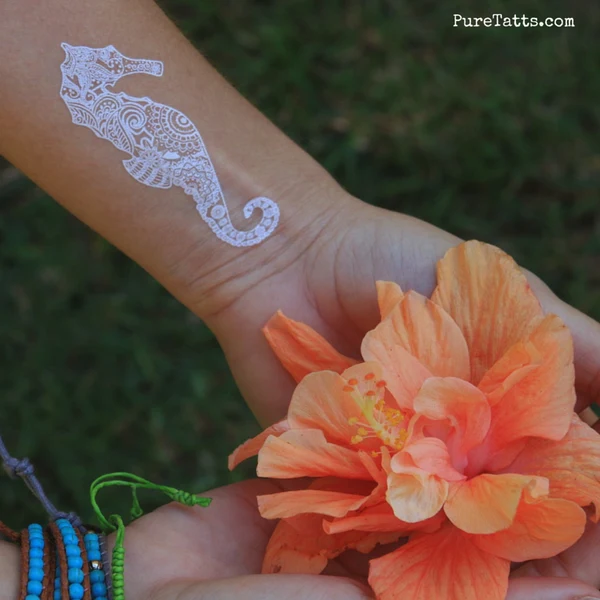
| Wrist or ankle | Small and precise | Minimal icons, compact patterns | Ideal for a subtle accent |
Balance does not require identical designs. It can come from visual weight, color, or position. A substantial matte black tattoo on one upper arm may be balanced by a dark belt, boot, or bag elsewhere in the outfit. A delicate white tattoo can echo the brightness of a shirt, sneaker, or piece of jewelry.
Negative space is equally important. Avoid filling every visible area around a statement design. Leaving the opposite side bare gives the tattoo more authority and prevents the overall look from becoming busy. The empty side is not unfinished; it frames the artwork.
For a stronger editorial effect, place the design off-center but align it with another detail. A tattoo near the left collarbone might correspond with a neckline, while one on the right hip can complement a side slit or draped seam. These quiet relationships make the styling feel considered.
One-sided tattoos are particularly versatile because clothing can control how much of the artwork appears. A sleeveless shirt can display a shoulder or upper-arm design, while a structured jacket may reveal only a glimpse at the cuff. This partial visibility adds curiosity without requiring a large tattoo.
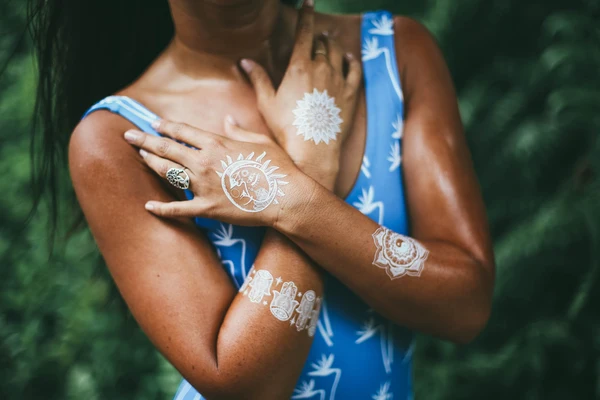
High-contrast black designs work well with white, gray, denim, and muted tones. White temporary tattoos create a softer, unexpected effect against deeper skin tones and darker garments. Matte finishes can feel understated, while sharply detailed geometric pieces add a more graphic edge.
If you enjoy bold visual language, explore geometric and tribal styles for inspiration. Their directional lines and strong silhouettes are naturally suited to a single-arm, single-leg, or one-sided torso arrangement.
Before applying a temporary tattoo, clean and dry the skin so the design has a smooth surface. Hold it in place first and check it from several angles. A mirror can help, but a quick photograph often reveals whether the placement feels centered on the chosen body area.
Pay attention to orientation. Some designs should point upward, follow the length of a limb, or face inward toward the body. Others are more effective when they turn outward and remain visible to people around you. Rotating the artwork by a few degrees can change its entire character.
The appeal of temporary asymmetry is its flexibility. You can wear one design on the same side repeatedly until it becomes a recognizable part of your style, then shift it to a nearby position for a new proportion. A left-forearm tattoo might move to the upper arm, shoulder, or opposite wrist when you want a different statement.
Seasonal collections also make it easy to adjust the visual tone. Choose fine-line or white artwork for a light summer look, then switch to matte black or densely detailed designs for cooler-weather layers. The side-only approach keeps every change focused rather than overwhelming.
A curated collection of black-and-white temporary tattoos can provide enough variety for everyday styling, events, travel, and creative photo sessions. Each placement becomes a small act of composition: one design, one side, and a deliberate amount of space around it.
Choose a design that reflects the mood you want to carry, then place it where your body naturally gives it attention. Apply one temporary tattoo, style it with intention, and let the asymmetry make the statement.
Posted on
Posted on
Posted on

Posted on

Posted on

Posted on
Posted on