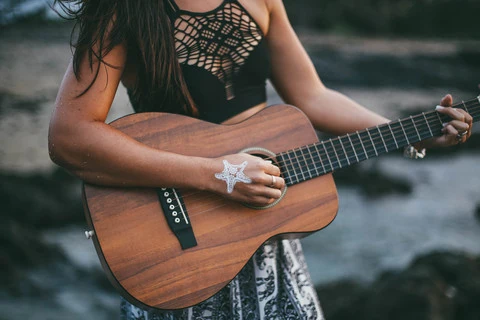
Temporary Tattoo Collection Donates 50% to Animal Rescue!
Posted on
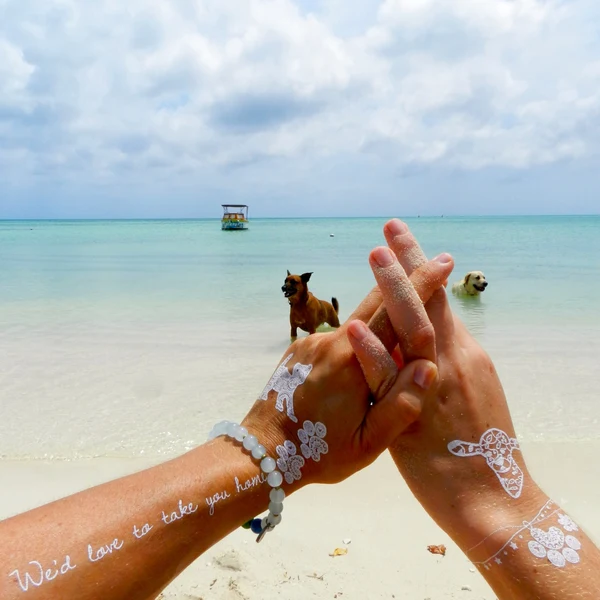

Posted on
Posted on
A wedding look is built from small, meaningful details: the texture of a veil, the shine of a ring, the shape of a bouquet, and the quiet confidence a bride carries down the aisle. Temporary tattoos can become part of that story, adding artistic detail without the permanence of traditional ink.
For brides who prefer a refined aesthetic, black-and-white temporary tattoos offer a polished alternative to colorful body art. Fine lines, geometric shapes, botanical motifs, and matte black accents can complement a gown while remaining subtle enough for a formal celebration.
Bridal temporary tattoos also create an easy way to coordinate with a partner, bridesmaids, or guests. A shared symbol can mark the wedding weekend, while an individual design can express the bride’s personality during photographs, the reception, or a destination celebration.
Permanent tattoos require long-term consideration, but temporary designs give couples freedom to experiment. A bride might choose a delicate crescent for the rehearsal dinner, a floral motif for the ceremony, and a bolder geometric accent for the after-party. Each design can suit a different part of the wedding experience.
Temporary body art is also practical for brides who want a visible detail without changing their everyday appearance. It can appear on the wrist, shoulder, collarbone, or forearm, then fade after the event. This makes it especially appealing for minimalist weddings and couples who value flexibility.
The designs can carry personal meaning, too. A fine-line star may represent a shared travel memory, while intertwined arches can echo the structure of a venue. Initials, botanical elements, and celestial symbols are easy to connect with a couple’s story without making the bridal look feel overly themed.
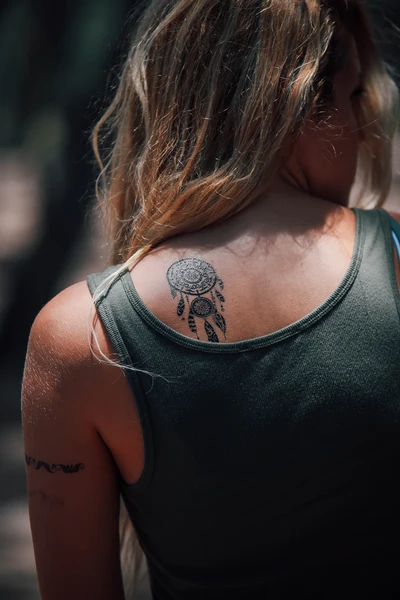
Black ink brings definition and contrast, making intricate details visible in wedding photography. Matte black designs can create a modern editorial effect, especially when paired with a simple silk dress, clean tailoring, or architectural jewelry. Fine black lines are well suited to brides who want something elegant rather than dramatic.
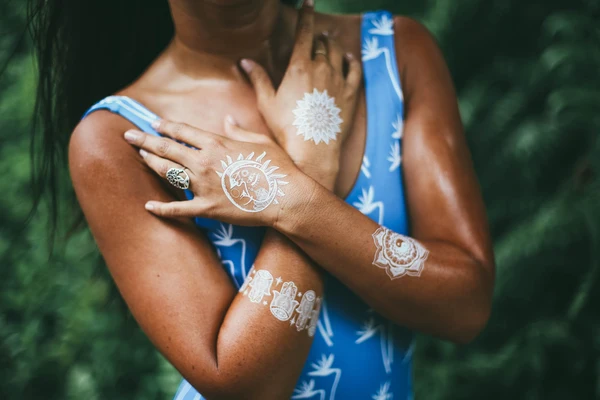
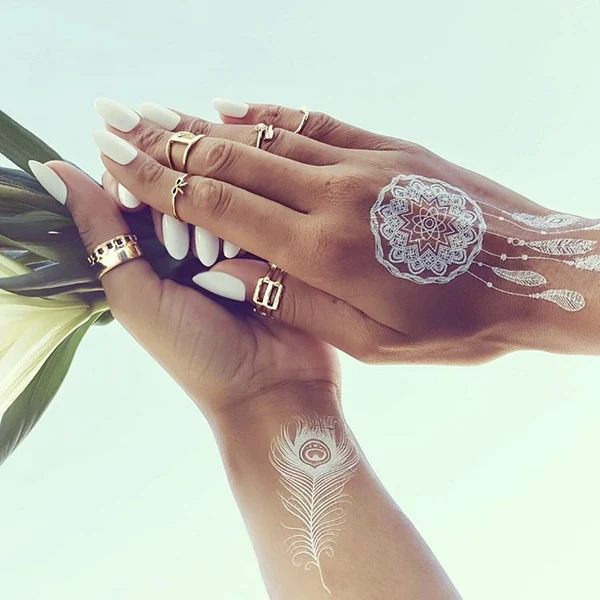
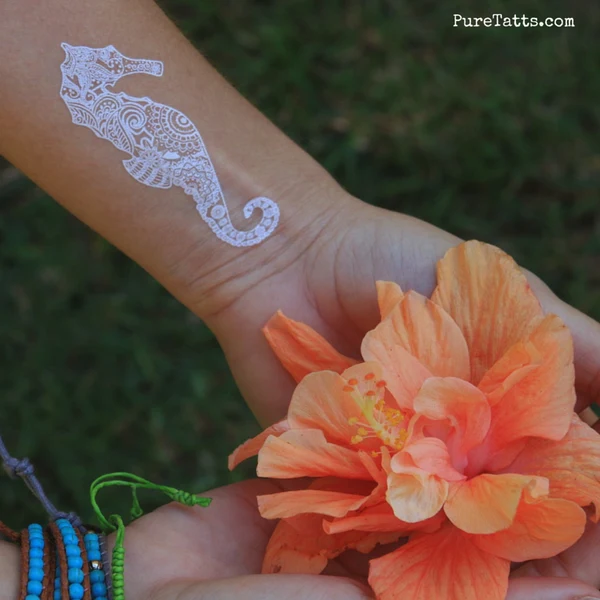
White temporary tattoos create a softer impression. They can resemble delicate body paint and work beautifully against sun-kissed skin, evening attire, or a monochromatic wedding palette. White ink-inspired designs are often chosen for the shoulder, upper back, ankle, or hand, where their subtle finish catches the light.
Geometric temporary tattoos suit contemporary ceremonies, while hand-drawn florals and celestial patterns bring a romantic quality. Couples exploring different visual directions can browse artist stories for inspiration, including ideas connected to illustration, seasonal style, and modern body adornment.
The wrist is a natural choice for a small bridal tattoo because it remains visible during ring exchanges, bouquet portraits, and champagne toasts. A narrow symbol or fine-line botanical design can sit beside a watch or bracelet without competing with other accessories.
The collarbone and shoulder offer more space for elegant artwork. These placements work well with strapless, off-the-shoulder, and open-back dresses, although the design should be selected with the gown’s neckline in mind. A sweeping branch, constellation, or symmetrical line pattern can follow the body’s natural shape.
For a more private detail, consider the ribcage, upper thigh, ankle, or back of the arm. These placements are ideal for a personal motif that appears during getting-ready photographs or on the dance floor. Bridesmaids might wear coordinated symbols in different locations, creating a visual connection without requiring identical outfits.
Before applying a design, consider movement, fabric, and photography. Areas that rub constantly against a tight sleeve, shoe, or shapewear may not be the best choice. Smooth, clean skin usually provides the most even result, and a small test application can help confirm comfort and appearance.
Different wedding events invite different levels of expression. A delicate white tattoo can complement a bridal shower or ceremony, while a matte black design may feel right for a rehearsal dinner or late-night reception. Seasonal collections can also help match a spring garden wedding, winter elopement, or coastal summer celebration.
| Wedding moment | Suitable style | Suggested placement | Overall effect |
|---|---|---|---|
| Bridal shower | Fine botanical or small symbol | Wrist or ankle | Soft and feminine |
| Rehearsal dinner | Geometric black design | Forearm or shoulder | Modern and polished |
| Wedding ceremony | Minimal white or fine-line motif | Collarbone or upper arm | Subtle and romantic |
| Reception | Bold matte black artwork | Back of arm or shoulder | Editorial and expressive |
| Honeymoon | Celestial, floral, or travel-inspired design | Ribcage or ankle | Personal and memorable |
Scale matters as much as the motif. A detailed design may need enough surface area for its lines to remain clear, while a small symbol can lose impact if it contains too many elements. Ask how the tattoo will look from a distance, in close-up portraits, and beside jewelry or lace.
A coordinated set can be more sophisticated than matching tattoos. For example, the bride could wear a central flower while the bridal party wears individual leaves, stars, or stems. This approach creates unity while allowing each person to choose a design that suits their style.
Photography should influence the final selection. High-contrast black designs tend to read clearly in both color and monochrome images, while white tattoos can create a barely-there effect that works beautifully in close portraits. A design with clean negative space is often easier to capture than one with many tightly packed details.
Lighting changes the way temporary ink appears. Natural daylight reveals fine lines and subtle white artwork, while reception lighting may make a matte black tattoo appear more graphic. If the wedding includes flash photography, choose a placement that will not be hidden by a bouquet, cuff, or dramatic sleeve.
Preparation is part of the visual result. Follow the product’s application instructions, avoid placing the tattoo over irritated skin, and allow it to settle before putting on clothing that may rub against it. A trial application before the wedding can reveal how the chosen design interacts with skin tone, accessories, and dress details.
Start with the wedding’s broader visual language. A black-and-white palette pairs naturally with ivory dresses, silver jewelry, black ribbon, white florals, and minimalist stationery. If the celebration includes stronger colors, neutral temporary tattoos can provide balance rather than adding another competing shade.
Artist-created designs are particularly effective for bridal styling because they often contain small variations in line weight and shape. Those details make the artwork feel considered and distinctive. Look for motifs that reflect the couple’s personality instead of selecting a design only because it is currently popular.
Timing also matters. Order the tattoos early enough to review the designs and plan placements. If several people are wearing them, place each design in a labeled envelope and share simple application guidance before the wedding weekend. This keeps the process organized when schedules become busy.
A temporary tattoo can be a small but memorable part of a bridal wardrobe. Whether the final choice is a white celestial mark, a delicate black flower, or a sharply drawn geometric form, it adds personality while preserving the freedom to change the look after the celebration.
Explore the black-and-white collection to find hand-drawn temporary designs suitable for the bride, bridal party, and wedding weekend. With the right artwork and placement, temporary ink becomes an elegant finishing detail for every photograph, toast, and shared memory.
Posted on
Posted on
Posted on

Posted on

Posted on
Posted on
Posted on