Temporary Tattoo Collection Donates 50% to Animal Rescue!
Posted on

Posted on
Posted on
A temporary tattoo can change the character of an outfit, photograph, or everyday look within minutes. Placement determines whether the design feels polished and intentional or slightly disconnected from the rest of your styling. The right position gives the artwork room to stand out while keeping your overall appearance visually calm.
Balance does not always mean matching both sides of the body. It can come from proportion, spacing, direction, and contrast. A small geometric tattoo near the wrist may balance a larger shoulder design, while two delicate pieces can create symmetry across the collarbones or forearms.
Temporary designs make experimentation easy. You can test a new position for a night out, coordinate body art with a seasonal wardrobe, or try a bold artist design before considering permanent ink. With a few placement principles, even highly detailed black-and-white tattoos can look naturally composed.
Begin by considering where the eye will travel. A design placed close to the center of the body, such as the sternum or upper back, creates a focused appearance. A tattoo positioned on an outer limb draws attention outward and may work best when paired with another element on the opposite side.
Symmetry is an easy starting point, especially for first-time placement. Matching or near-matching pieces on both wrists, ankles, shoulders, or sides of the ribcage create a deliberate effect. Exact duplication is not essential; two designs with similar visual weight can feel balanced while still showing individual character.
Asymmetrical placement can appear equally refined when the sizes and positions are thoughtfully related. For example, a larger matte black piece on one upper arm may be balanced by a smaller but darker geometric design near the opposite forearm. The goal is an even distribution of attention rather than identical positioning.
The natural lines of the body can make a temporary tattoo look more integrated. Long, narrow artwork often suits the forearm, calf, spine, or side of the ribcage. Circular designs work well on the shoulder, upper arm, thigh, or center of the chest because these areas provide a broader visual canvas.
Think about direction before applying the tattoo. A vertical design can elongate the arm or leg, while a horizontal motif may emphasize the collarbone or shoulder line. Curved artwork often follows the hip, shoulder blade, or ankle more gracefully than a rigid pattern.
If you are exploring different styles, the Pure Tatts collection offers a useful range of hand-drawn black, white, matte, and geometric designs to compare. Hold the transfer against your skin before application and rotate it slightly to see which angle follows your anatomy best.
Scale is one of the most important elements in creating a composed temporary tattoo arrangement. A tiny design can disappear on the upper back or thigh, while a large piece may overwhelm the wrist. Choose artwork that occupies enough space to remain visible without competing with every detail of your outfit.
Spacing matters when wearing several tattoos together. Leave enough skin between designs for each piece to remain readable. A cluster can look artistic when the motifs share a theme, but crowded placement can make detailed line work appear muddy from a distance.
A useful approach is to create one visual anchor and support it with smaller accents. Place the largest or most intricate design on the area you want to emphasize, then add one or two simpler pieces nearby or across the body. This creates rhythm without making the arrangement feel busy.
Different body areas create different impressions, even when the same design is used. The right choice depends on how visible you want the tattoo to be, how much movement the area receives, and whether the piece should complement jewelry or clothing.
| Placement Area | Visual Effect | Best Design Types | Styling Note |
|---|---|---|---|
| Wrist or Forearm | Visible and expressive | Fine line, geometric, small symbols | Works well with watches and bracelets |
| Collarbone | Elegant and directional | Botanical lines, delicate text, slim motifs | Pair with open necklines |
| Shoulder or Upper Arm | Balanced and versatile | Medium artwork, bold black designs | Easy to reveal or cover |
| Ribcage or Side | Intimate and elongated | Vertical patterns, ornamental designs | Suits fitted or cropped silhouettes |
| Ankle or Calf | Light and understated | Minimal icons, narrow geometric pieces | Complements sandals and cropped trousers |
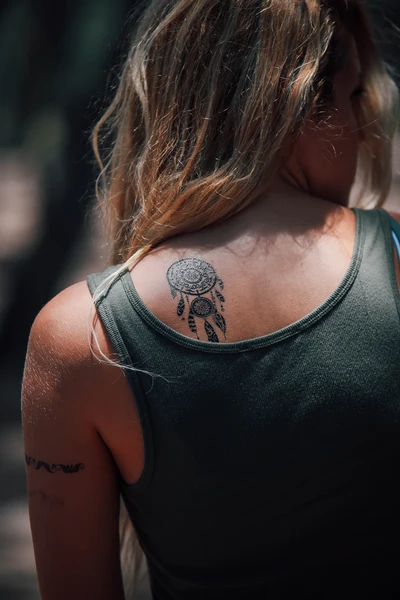
| Upper Back | Centered and impactful | Larger detailed artwork | Looks strong with open-back clothing |
Placement should also reflect the occasion. A collarbone tattoo may suit a formal evening outfit, while a forearm design can make a casual look feel more graphic. For subtle styling, white ink tips can help you choose a soft contrast that remains refined rather than visually dominant.
Black temporary tattoos create strong definition against most skin tones and clothing colors. They are particularly effective when the rest of the outfit has clean lines, neutral shades, or one repeating dark accent. A matte black design can feel modern and architectural, especially when placed near silver jewelry or structured tailoring.
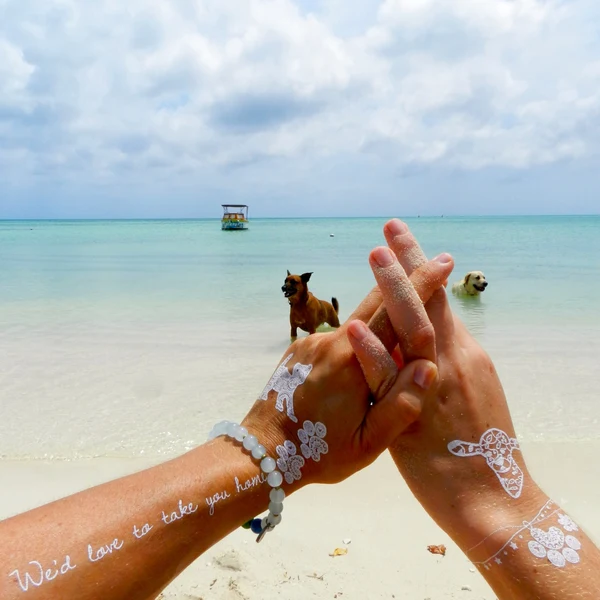
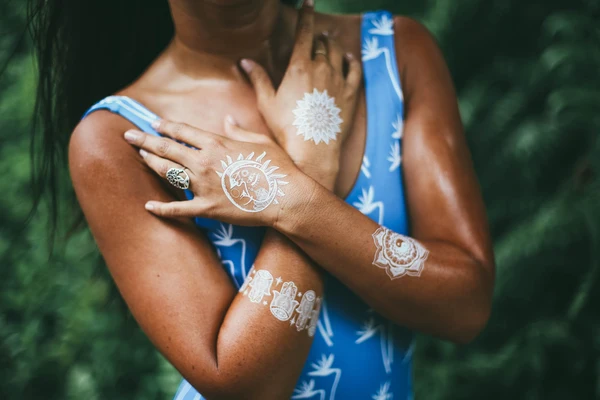
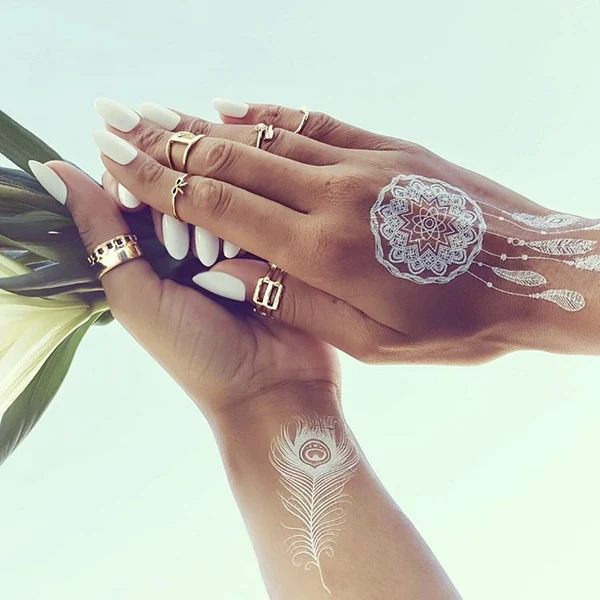
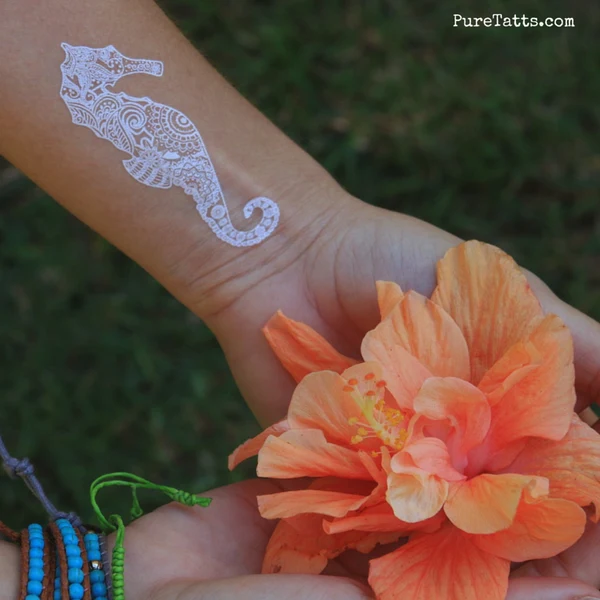
White tattoos create a quieter effect and can look especially balanced on darker fabrics, sun-kissed skin, or areas that benefit from subtle detail. Since white ink has a softer visual presence, a larger design may be needed to achieve the same impact as a small black tattoo.
You can also coordinate tattoo placement with accessories. A design near the wrist can echo a watch, while a shoulder tattoo may mirror the shape of a bag strap or neckline. Keep the relationship simple: one repeated color, angle, or shape is usually enough to connect the elements.
When applying multiple temporary tattoos, choose a visual language before selecting individual pieces. Geometric designs create a structured, contemporary effect, while fine botanical or ornamental artwork feels softer. Mixing styles is possible, but repeating one feature—such as thin lines, angular shapes, or solid black areas—will keep the arrangement unified.
Use these practical recommendations when planning your placement:
Skin movement should be part of the test. Elbows, knees, wrists, and ankles bend frequently, so a design may distort or rub more quickly there. If longevity matters, apply the tattoo to clean, dry skin away from heavy friction and avoid placing detailed artwork directly over creases.
A balanced temporary tattoo should feel connected to the way you dress and move. Consider visibility, proportion, contrast, and the direction of the artwork before committing to an application. Even a simple design can look elevated when it follows the body’s natural lines and has enough space around it.
Try a few combinations from seasonal collections or artist collaborations, then choose the arrangement that feels most natural in your wardrobe. Explore detailed black, white, and geometric temporary tattoos at Pure Tatts and use each design as a low-commitment way to refine your personal style.
Posted on
Posted on
Posted on

Posted on

Posted on
Posted on
Posted on