Temporary Tattoo Collection Donates 50% to Animal Rescue!
Posted on
Posted on
Posted on
Geometric tattoo art has become one of the most recognizable visual languages in contemporary body design. Crisp lines, repeated forms, symmetry, sacred geometry, dotwork, and abstract blackwork can create images that feel both ancient and strikingly modern. The style works across a wide range of scales, from a small triangle on the wrist to an intricate sleeve built from interlocking patterns.
Its appeal comes from the balance between order and personal meaning. A circle can suggest continuity, while a grid may represent structure, and a radial design can evoke movement or cosmic balance. Today, these ideas appear in permanent ink, fashion editorials, digital illustration, jewelry, and premium temporary tattoos, allowing people to experience geometric motifs without committing to a lifelong design.
Long before modern tattoo studios, geometric marks appeared in body adornment, textiles, architecture, pottery, and ceremonial objects. Across Polynesian cultures, repeating bands and angular motifs could communicate identity, ancestry, social position, and spiritual connection. In other regions, circles, spirals, diamonds, and intersecting lines carried associations with protection, fertility, the natural world, or the cycles of life.
These traditions should not be treated as a single shared style. Each culture developed its own visual system and meanings, often connected to community and ritual. Contemporary artists may draw inspiration from the visual discipline of traditional pattern-making, but responsible design also requires respect for cultural context and an awareness that sacred symbols are not simply decorative accessories.
The modern fascination with geometric form grew alongside developments in art, architecture, and graphic design. Movements such as Art Deco celebrated symmetry, stepped shapes, sunbursts, and precise line work. Later, Bauhaus and modernist designers explored circles, squares, grids, and minimal compositions as tools for creating visual clarity.
Tattoo artists adapted this language to the body, where a flat pattern must respond to curves, joints, muscle, and movement. The result was a new kind of composition: geometry became architectural, but the skin supplied an organic foundation. Clean line tattoos, abstract blackwork, and minimalist symbols gained attention because they could look deliberate without relying on realistic imagery.
Sacred geometry has played a major role in the recent popularity of geometric body art. Mandalas, Platonic solids, the Flower of Life, and labyrinth-inspired forms are frequently used to suggest balance, interconnectedness, meditation, or transformation. Some wearers choose these patterns for spiritual reasons, while others are drawn to their mathematical elegance and visual rhythm.
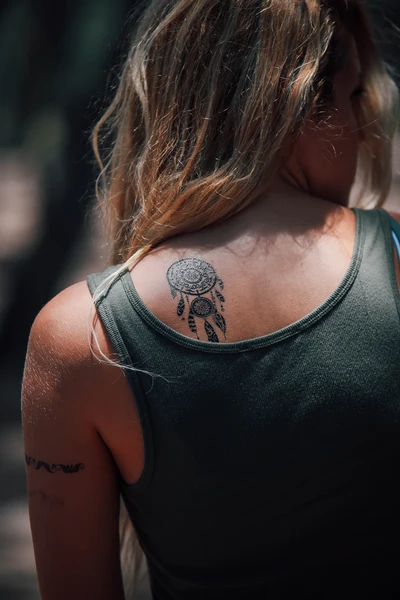
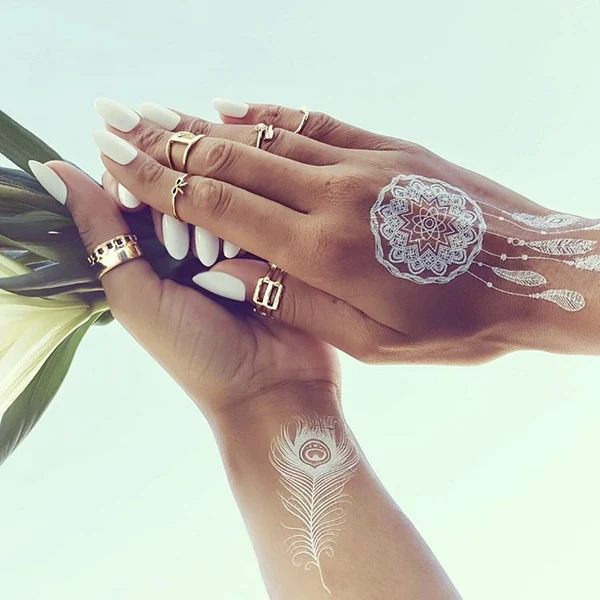
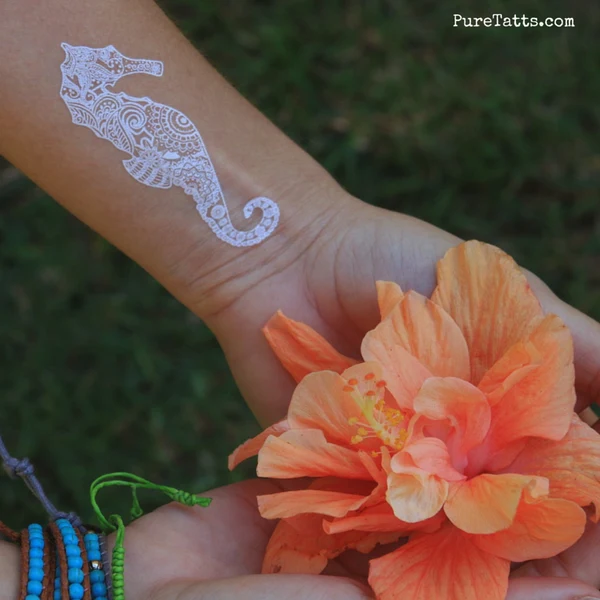
Dotwork has expanded the vocabulary further. Thousands of carefully placed points can create gradients, shadows, and dimensional illusions without traditional solid shading. When combined with negative space, a black geometric tattoo can appear airy rather than heavy. White ink and matte black finishes offer additional contrast, especially for people who enjoy monochrome fashion and restrained visual details.
The following styles show how different approaches can create distinct results:
| Style | Visual Character | Common Associations | Best Known For |
|---|---|---|---|
| Fine-line geometry | Light, precise, and understated | Simplicity and balance | Small symbols and delicate placements |
| Dotwork | Textured, gradual, and atmospheric | Meditation and detail | Mandalas and shaded patterns |
| Blackwork geometry | Bold, graphic, and high contrast | Strength and structure | Large motifs and strong silhouettes |
| Sacred geometry | Symmetrical and symbolic | Unity and transformation | Radial designs and layered forms |
| White geometric ink | Subtle, soft, and unexpected | Individuality and minimalism | Low-key accents and pale skin contrast |
Social media has accelerated the spread of geometric tattoo trends. A carefully photographed forearm, ankle, shoulder, or sternum design can be shared globally within seconds, exposing audiences to artists, techniques, and regional interpretations that might once have remained local. Online portfolios also make it easier to compare line quality, composition, and placement before booking an appointment.
Digital tools have changed the design process as well. Artists can use vector software, 3D modeling, and body-mapping applications to test proportion and alignment. Some create designs that appear to move when the wearer changes position, while others use optical illusions, impossible shapes, and mathematical tessellations. The most successful work still depends on human judgment: software can produce perfect symmetry, but an artist must decide how that symmetry belongs on a living body.
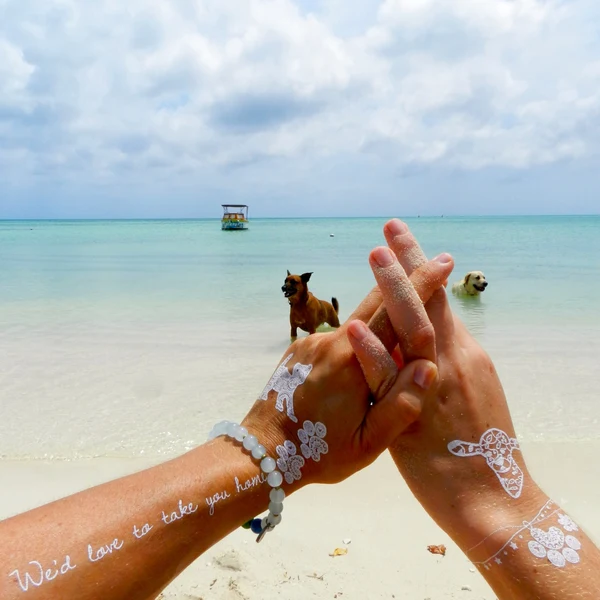
Temporary tattoo brands have helped bring this visual culture into everyday styling. A detailed geometric motif can function like jewelry or graphic makeup, making it possible to experiment with placement, scale, and contrast at festivals, events, photo shoots, or ordinary weekends.
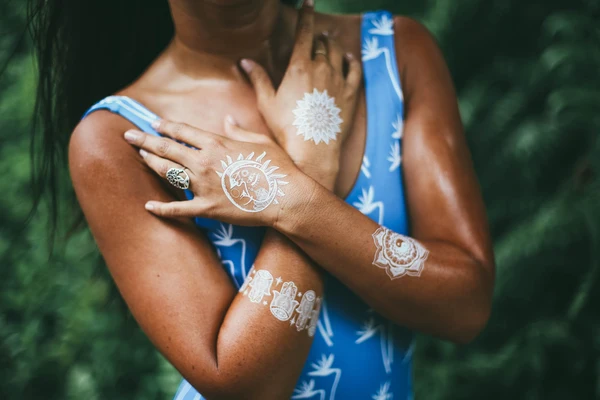
Modern geometric tattoos often operate as accessories as much as personal symbols. Black designs pair naturally with neutral clothing, while white ink can create a quieter effect against darker fabrics or sun-kissed skin. A repeating pattern may echo the lines of a tailored jacket, the structure of a handbag, or the angular shape of contemporary jewelry.
Color coordination matters even when the tattoo itself is monochrome. Placement and scale can determine whether a design feels dramatic or discreet, and the surrounding outfit can either frame the motif or compete with it. For practical styling ideas, this guide on matching tattoo palettes connects temporary body art with clothing tones, textures, and seasonal dressing.
This fashion connection explains why geometric designs continue to move beyond tattoo studios. They appear in runway styling, editorial photography, album artwork, phone cases, and interior prints. Their clean structure makes them adaptable, while their symbolism gives a personal layer to an otherwise minimal look.
A meaningful geometric tattoo does not need an elaborate explanation, but it benefits from thoughtful selection. Consider whether the design appeals because of its symbolism, its proportions, its relationship to a particular body area, or simply its visual energy. These are different reasons, and identifying yours can help narrow the right style.
Temporary designs are useful during this stage because they let you test how a motif behaves in real life. Wear one while moving, dressing, working, or attending an event. Notice whether the lines feel balanced from different angles and whether the scale suits your usual wardrobe. For questions about a product, artist collaboration, or seasonal release, the Pure Tatts contact team provides a direct way to get brand-specific information.
A considered choice also protects the design from becoming a passing impulse. Geometry may look simple, but small changes in spacing, line weight, and placement can transform its character. The more carefully these details are tested, the more naturally the finished piece can become part of a personal style.
The strongest geometric looks usually have a clear visual priority. One prominent motif can anchor an outfit, while smaller marks can repeat a shape across the hands, collarbone, shoulder, or ankle. Matching the scale of the design to the clothing keeps the overall appearance intentional rather than crowded.
Useful principles include:
These choices reflect the continuing evolution of geometric tattoo culture. What began as a visual language connected to ancient pattern systems now intersects with modern art, fashion, technology, and personal experimentation. Its lasting strength lies in that flexibility: the same circle, grid, or mandala can carry cultural history, private meaning, or pure appreciation for form.
Explore Pure Tatts’ hand-drawn geometric, white, and matte black designs to find a pattern that fits your style today. A temporary tattoo can be the first step toward discovering the placement, scale, and visual rhythm that feel most like you.
Posted on
Posted on
Posted on

Posted on

Posted on
Posted on
Posted on