Temporary Tattoo Collection Donates 50% to Animal Rescue!
Posted on

Posted on
Posted on
A strong editorial image is built from details: the angle of a shoulder, the texture of fabric, the direction of light, and the small visual elements that give a frame its personality. Temporary tattoos offer an adaptable way to add those details without committing the model to permanent body art.
For photographers, stylists, and creative directors, temporary tattoos for photo shoots can function as jewelry, graphic design, or part of the narrative. A fine geometric mark may sharpen a minimalist portrait, while a matte black illustration can bring contrast to soft tailoring or romantic styling.
Because the designs can be changed between looks, they are especially useful for campaigns, mood boards, music portraits, fashion editorials, and social content. With thoughtful placement and preparation, temporary ink can look intentional, refined, and highly distinctive on camera.
A temporary tattoo should support the composition rather than appear as an unrelated decoration. Treat it like a graphic element: consider its scale, direction, negative space, and relationship to the clothing. A design placed along the collarbone can echo a neckline, while a vertical motif on the forearm can reinforce the lines of a sleeve.
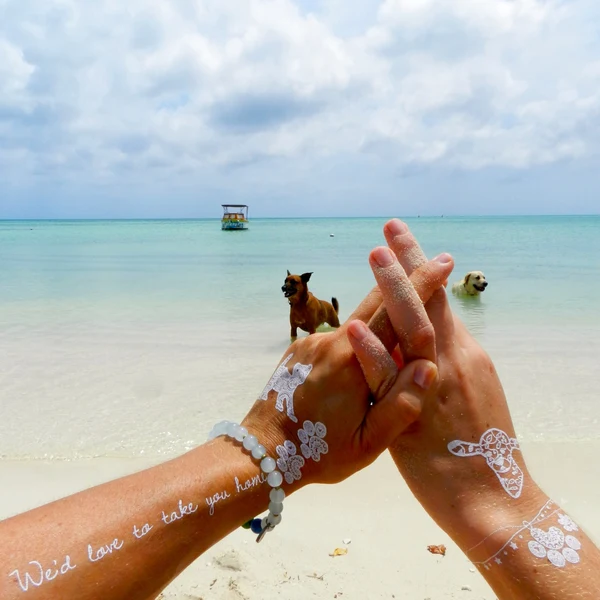
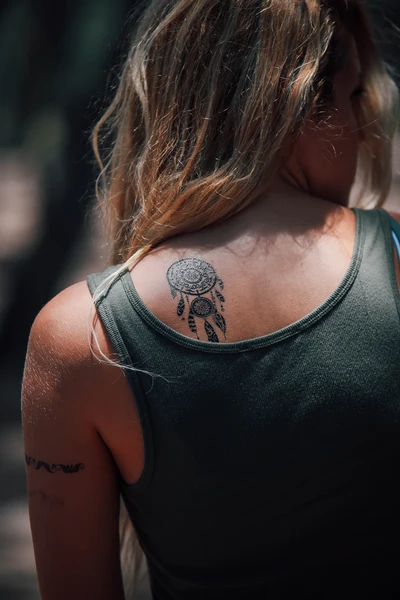
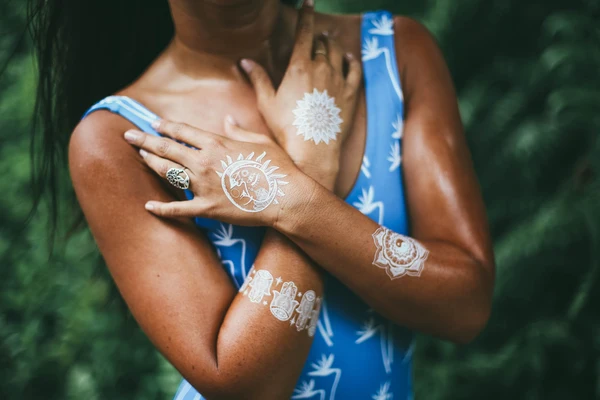
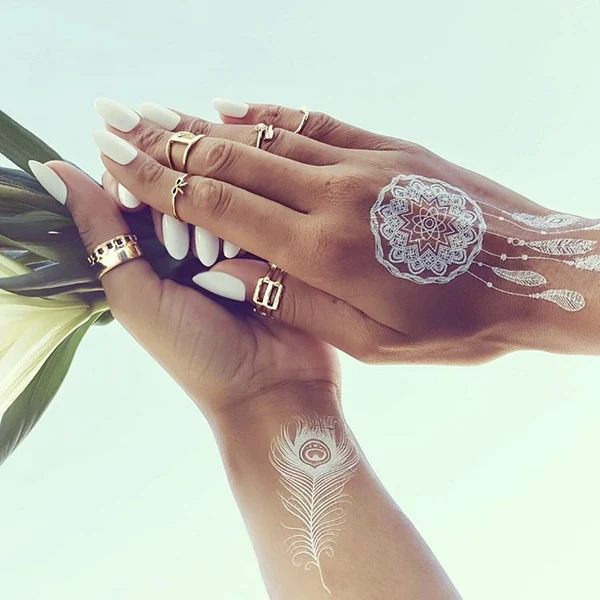
Black-and-white tattoos are particularly effective because they create definition without introducing a competing color. They work with monochrome styling, neutral palettes, denim, metallics, and saturated fashion pieces. White ink can create a quieter, almost unexpected detail, especially against deeper skin tones or under directional lighting.
Hand-drawn designs bring a less generic quality to the final image. Fine irregularities, illustrative marks, and organic shapes can make a photograph feel more personal than one built entirely from polished, symmetrical graphics.
Before selecting a design, define the emotional direction of the shoot. A stark studio portrait may call for a single architectural symbol, while a movement-focused campaign could benefit from several small marks that appear across the body as the model changes pose.
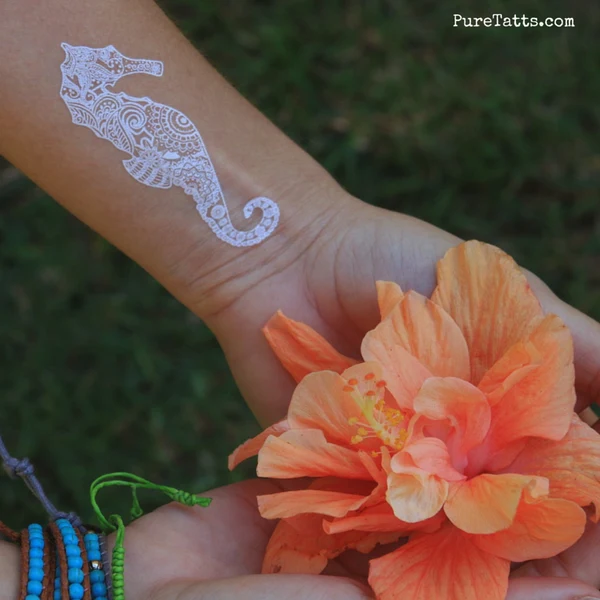
For a futuristic concept, look for geometric tattoos, angular lines, and repeated forms. A softer editorial may suit botanical illustrations, celestial details, or delicate hand-drawn symbols. Matte black designs can create a bold, sculptural effect, while white temporary tattoos often feel airy, modern, and almost painted onto the skin.
It is helpful to create a visual map before the shoot. Mark where the tattoos will sit in relation to visible seams, accessories, and body movement. This prevents a beautiful design from being hidden by a cuff or interrupted by a necklace.
Placement affects both the story and the technical quality of the image. The wrist, shoulder, neck, collarbone, and upper arm are easy to feature in portraits, but less obvious locations can create a sense of discovery. A tattoo peeking from beneath a shirt cuff may feel more editorial than one positioned directly at the center of the frame.
Think about the intended crop. A design that looks balanced in a full-length photograph may become awkward in a close-up. Ask whether the mark should be visible in every image or appear only when the model turns, reaches, or adjusts a garment.
Skin preparation also influences the result. Apply the tattoo to clean, dry skin without moisturizer or body oil, and avoid areas with heavy friction. Smooth skin gives the design a sharper edge, while excessive hair, perspiration, or fabric rubbing can shorten its wear time.
Lighting changes the character of temporary ink. Direct flash can emphasize crisp outlines and make a high-contrast black design feel graphic. Soft window light reveals fine detail and gives delicate illustrations a more natural, intimate appearance. Side lighting can increase texture and make a white tattoo appear dimensional.
For a polished campaign, test the design under the exact lighting setup before photographing the full look. Some white tattoos may appear subtle in person but luminous under studio light. Matte black options may absorb light beautifully, though very fine details can merge into shadow if the exposure is low.
The camera also sees more than the eye. Check the tattoo at the intended shooting distance and through the camera display. A mark that seems perfectly sized during styling may need to be larger or placed closer to the lens to remain legible in the final crop.
| Shoot direction | Suitable tattoo style | Effective placement | Lighting approach |
|---|---|---|---|
| Minimal studio portrait | Fine geometric or single-line design | Collarbone, wrist, upper arm | Soft, even light |
| Avant-garde fashion editorial | Large matte black graphic | Shoulder, back, side of torso | Directional light with defined shadows |
| Dreamy beauty campaign | White or delicate illustrated motif | Temple, hand, collarbone | Diffused light with gentle highlights |
| Streetwear lookbook | Bold symbol or layered small designs | Forearm, neck, fingers | Flash or crisp daylight |
| Movement-focused portrait | Elongated organic or abstract form | Arm, leg, ribcage | Side light that follows body lines |
The most convincing images come from visual coordination. If the clothing features strong patterns, a simpler tattoo may keep the frame from becoming crowded. With plain garments, a detailed design can act as the focal point. Consider the tone of the materials too: matte black ink pairs naturally with leather and heavy cotton, while white ink can complement silk, sheer fabric, and reflective surfaces.
Makeup can either echo or balance the tattoo. Graphic eyeliner, brushed brows, and sculptural hair can reinforce a sharp black design. A luminous complexion and understated makeup may allow intricate body art to carry more of the visual interest. Repeated shapes across styling, makeup, and tattoo placement create cohesion without making the look feel overly coordinated.
Accessories require careful editing. A bracelet beside a wrist tattoo may obscure its edge, and a chain can compete with a collarbone design. Photograph the chosen tattoo from several angles before finalizing jewelry and clothing changes.
Professional-looking results depend on careful application. Clean the chosen area, dry it completely, and position the design before pressing it down. Hold the transfer firmly against the skin and use enough water to release the backing evenly. Allow the design to dry before adding clothing or body products.
Bring extra designs to the set. A tattoo may need to be repositioned after a styling change, or a replacement may be useful if a model sweats under hot lights. Keeping a small kit with water, cotton pads, scissors, blotting paper, and gentle cleansing wipes makes adjustments easier.
Artist-led collections are valuable when a shoot needs a recognizable point of view. The limited-edition designs from Pure Tatts can add an illustrative, collectible quality to a concept while giving the styling team a broader range of detailed motifs.
When a shoot includes several outfits, decide whether the tattoo should remain a visual signature or change with every look. Repeating one design can connect a series of photographs and make the campaign feel deliberate. Switching designs can create chapters, showing different sides of the same character.
For a cohesive gallery, maintain consistency in scale, finish, or placement. For example, a sequence could use only matte black pieces, or introduce small white marks gradually as the lighting becomes softer. This kind of progression gives the final set rhythm.
A creative team can also photograph the application itself. Close-ups of the transfer, the model examining the design, or the artistically arranged tattoo sheets can become behind-the-scenes content. When sourced from Pure Tatts, the designs can support both the finished editorial and the story surrounding its creation.
A small amount of planning protects the visual result and keeps changes efficient.
After the session, review the images at full resolution as well as in thumbnail form. Fine linework should remain visible, and the tattoo should enhance the pose rather than distract from the face, garment, or product being featured.
Temporary body art gives a creative team room to experiment with identity, texture, and visual contrast. Explore different finishes, plan the placement with the camera in mind, and use the designs as part of the composition from the earliest mood-board stage. For questions about selecting styles or preparing an order for an upcoming shoot, contact the Pure Tatts team.
Posted on
Posted on
Posted on

Posted on
Posted on
Posted on
Posted on