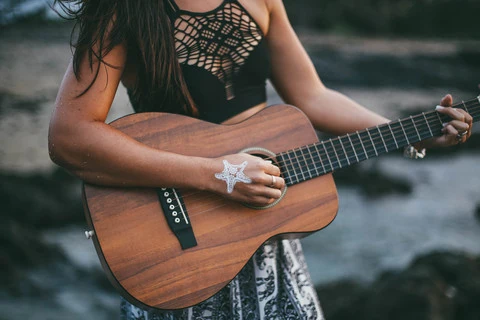
Temporary Tattoo Collection Donates 50% to Animal Rescue!
Posted on

Posted on
Posted on
Mixing different tattoo styles on one body can create a look that feels personal, layered, and visually dynamic. The key is not making every design identical. Instead, successful tattoo styling comes from finding relationships between contrasting elements, such as line weight, placement, scale, texture, and color.
Temporary tattoos make this creative process especially flexible. You can test a sleeve arrangement, experiment with asymmetry, or combine delicate geometric artwork with bold matte black shapes before committing to a permanent design. With careful planning, a collection of individual tattoos can read as one intentional composition.
Pure Tatts brings an editorial approach to this process through detailed, hand-drawn temporary designs in black, white, geometric, and matte black styles. Each piece can stand alone, yet the right combination can create a complete visual story across the body.
A cohesive tattoo arrangement usually begins with one shared visual feature. This might be fine-line detail, angular geometry, botanical inspiration, bold silhouettes, or a preference for high contrast. When designs have a common visual language, they can come from different categories without looking disconnected.
For example, a white tattoo with delicate linework can balance a dense black geometric design when both include repeated shapes or intentional negative space. Similarly, illustrative artwork can sit comfortably beside abstract marks if the designs share a similar level of detail. Think of each tattoo as part of a visual vocabulary rather than an isolated decoration.
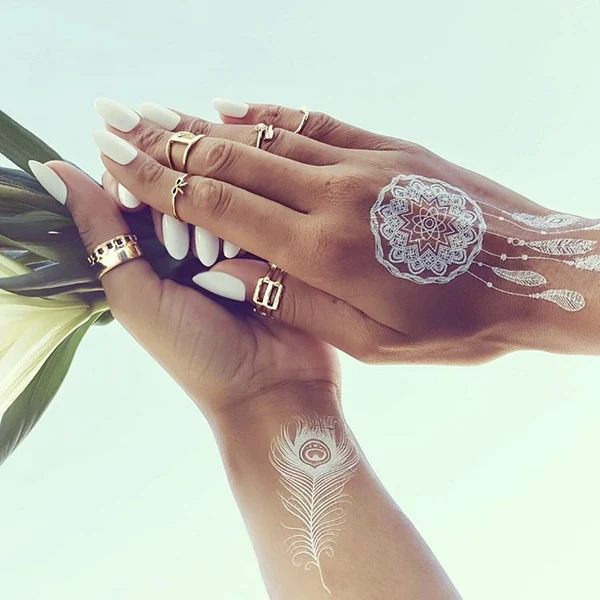
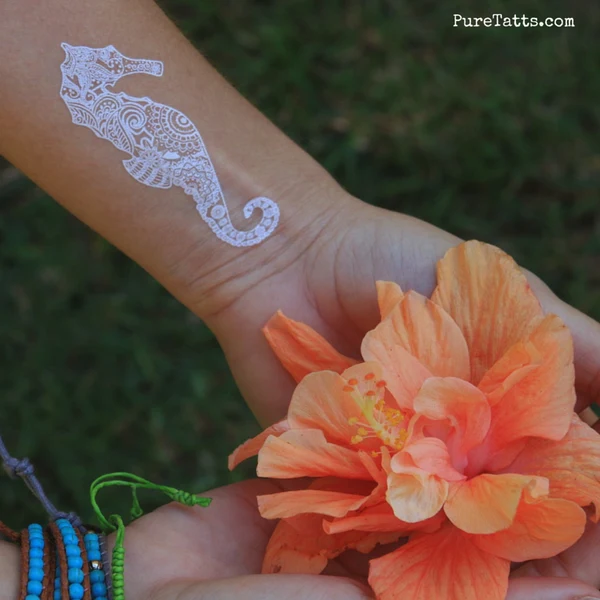
Black and white work is particularly adaptable because it creates contrast without introducing competing hues. This black-and-white tattoo guide explains why monochrome designs retain their appeal across different aesthetics, from minimalist styling to dramatic body art.
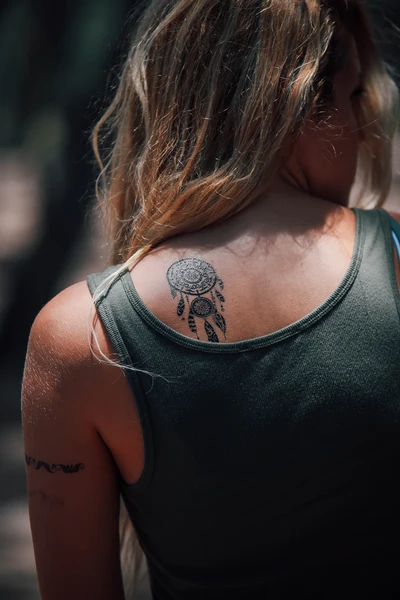
Placement determines how separate tattoo styles interact. A large shoulder piece can act as an anchor, while smaller symbols, lines, or ornamental motifs create movement around it. Areas with natural visual importance, such as the upper back, chest, forearm, and thigh, can support more substantial artwork without overwhelming the overall look.
Consider the body’s proportions when combining designs. A large geometric tattoo on the upper arm might pair with a narrow vertical design on the ribs, while a delicate wrist tattoo could echo a small detail from a larger back piece. Repetition in size is unnecessary; balance can come from the distribution of visual weight.
The shoulder and upper back are especially useful for building a layered arrangement because they offer broad surfaces and natural transitions toward the arm or spine. Use this shoulder placement guide when testing designs that need room to breathe or connect with nearby pieces.
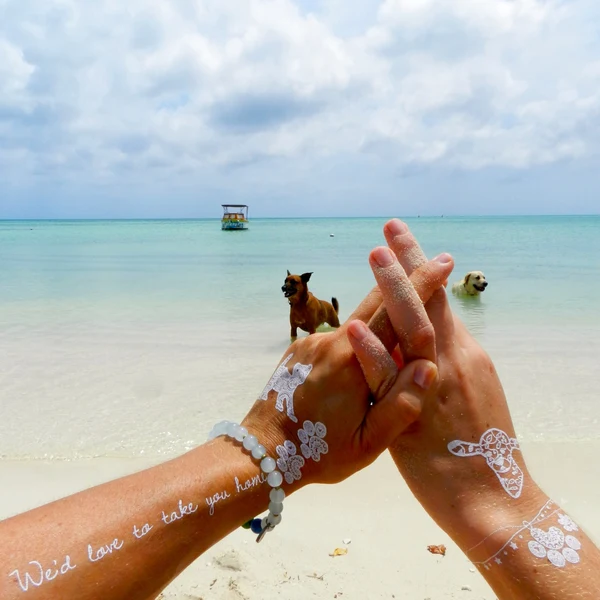
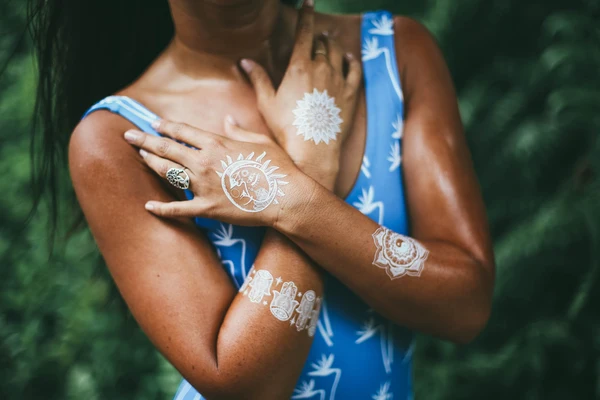
Contrast gives a mixed-style tattoo layout its energy. Pairing matte black artwork with white temporary tattoos can produce a striking light-and-shadow effect, while fine-line designs can soften the impact of heavier graphic shapes. Contrast works best when it is deliberate and repeated across the body.
Avoid placing every bold design in one area. If a dense black piece sits on the forearm, consider adding a smaller dark accent near the shoulder, ankle, or opposite side of the body. This creates visual rhythm and prevents one section from feeling overloaded.
| Style combination | Visual effect | Best balancing detail |
|---|---|---|
| Fine line and matte black | Softness against intensity | Shared placement direction |
| White and black geometric | High contrast and modern structure | Repeated angles or shapes |
| Botanical and abstract | Organic movement with graphic edge | Similar line density |
| Minimal symbols and large artwork | Scale variation and visual hierarchy | Matching negative space |
| Ornamental and illustrative | Decorative detail with storytelling | A consistent body axis |
Texture matters as much as color. A finely detailed design can disappear beside a very dense tattoo if there is no breathing room, while two highly intricate pieces may compete for attention. Use empty skin as a design element that separates, frames, and connects the artwork.
A mixed tattoo collection feels more meaningful when every piece has a role. One design might serve as a focal point, another may represent a memory, and a smaller mark may simply provide balance. This approach prevents impulse choices from making the body art feel visually scattered.
You can also create themes through symbolism rather than matching imagery. A crescent, architectural shape, abstract eye, and botanical form may look unrelated at first, yet they can express ideas of transformation, structure, perception, and growth. The connection becomes personal instead of literal.
Artist collaborations and seasonal collections can help expand this visual vocabulary. Look for details that echo across designs, such as repeated arcs, symmetrical framing, tiny stars, sharp corners, or flowing contour lines. These subtle links allow different artists and styles to coexist naturally.
Temporary tattoos are ideal for testing composition before settling on a final arrangement. Begin with the largest or most visually dominant design. Place it where you want the eye to land, then add supporting pieces at different distances. Step back and view the arrangement from several angles before deciding whether it feels balanced.
Photographs are useful because they reveal spacing problems that may be difficult to notice in a mirror. Take full-body and close-up images, then assess whether the designs create a natural path across the shoulder, arm, torso, or leg. Consider how the layout will look with everyday clothing, swimwear, and formal outfits.
Use these recommendations when building a temporary tattoo composition:
Temporary placement also lets you explore asymmetry without pressure. A balanced look does not have to mirror itself. One arm can carry a denser collection while the other features a single refined design, provided the overall visual weight feels intentional.
The body is active, so a strong tattoo arrangement should respond to movement. Curved artwork can follow the shoulder or hip, while vertical designs can emphasize the length of the forearm, calf, or torso. Angular tattoos often look powerful across joints and flatter areas where their structure remains clear.
Think about transitions between body zones. A design near the collarbone can direct attention toward the shoulder, while a piece on the upper arm can point toward the elbow or wrist. Even unrelated tattoo styles can feel connected when their orientation guides the eye in a similar direction.
Placement should also reflect how much attention you want each piece to receive. A small white design may work best where it can catch light, while a matte black tattoo can hold visual presence in a more prominent position. Use visibility, movement, and contrast to establish hierarchy rather than relying on size alone.
The best mixed-style tattoo arrangements can change over time. You may begin with a simple geometric piece, add a white accent for contrast, and later introduce an illustrative design that gives the collection more softness. Temporary tattoos make it easy to explore these stages without treating the first arrangement as permanent.
Explore the Pure Tatts collection for hand-drawn designs that can be combined across styles, placements, and levels of intensity. Start with a composition that reflects your current wardrobe and mood, then allow future pieces to add new texture and meaning.
Select a few designs, place them with intention, and photograph the results in natural light. With thoughtful spacing and a clear visual thread, different tattoo styles can become a flexible expression of your personality—one arrangement at a time.
Posted on
Posted on
Posted on

Posted on

Posted on
Posted on
Posted on