Temporary Tattoo Collection Donates 50% to Animal Rescue!
Posted on


Posted on
Posted on
A single temporary tattoo can make a statement, but several designs placed with intention can create something more personal: a visual story that unfolds across your skin. Each piece can represent a memory, mood, place, relationship, or stage of life while still working as part of a unified look.
The key is to think beyond individual artwork. Consider how the designs relate through size, placement, color, texture, and symbolism. A carefully planned tattoo composition can feel expressive without appearing crowded or random.
Temporary tattoos make this process flexible. You can test a sleeve, curate a collection for an event, or change the narrative as your style develops. With detailed black-and-white designs, geometric motifs, white ink effects, and matte finishes available, there are plenty of ways to build a cohesive arrangement.
Every strong tattoo story begins with a theme. It might be a connection to nature, a fascination with celestial imagery, a personal journey, or a collection of symbols tied to your identity. The theme does not need to be obvious to everyone else; it simply needs to give your choices a consistent direction.
Write down three to five words that describe the feeling you want. “Grounded, mysterious, organic” could lead to botanical lines, stones, moons, and insects. “Bold, architectural, modern” might suggest geometric forms, sharp angles, and abstract structures.
A central idea helps you edit. When two designs are attractive but only one supports the overall mood, the theme makes the decision easier. It also prevents the final arrangement from becoming a collection of unrelated images.
Your designs should share at least one visual quality. This could be a limited palette, similar line weight, repeated shapes, or a consistent level of detail. Black-and-white temporary tattoos are especially effective for storytelling because they create a restrained foundation that allows symbolism and placement to take the lead. The appeal of this palette is explored further in black-and-white tattoo style.
Contrast can strengthen the narrative. Pair an intricate illustration with a simple symbol, or place a small white design near a dense matte-black shape. Repetition creates rhythm, while contrast gives the eye a place to pause.
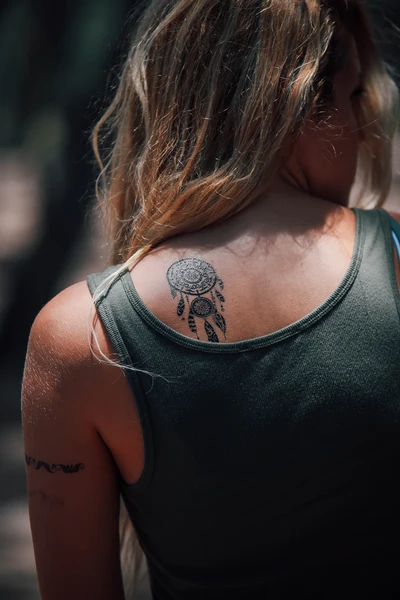
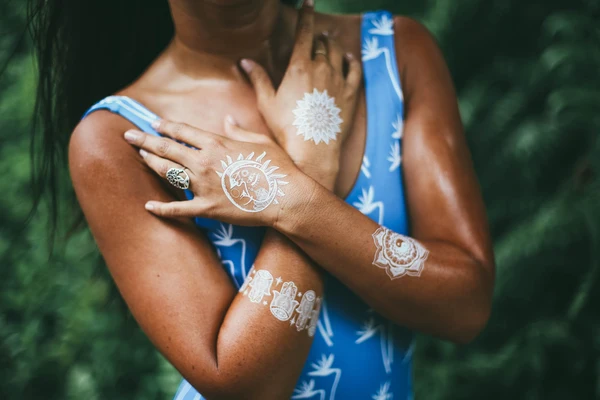
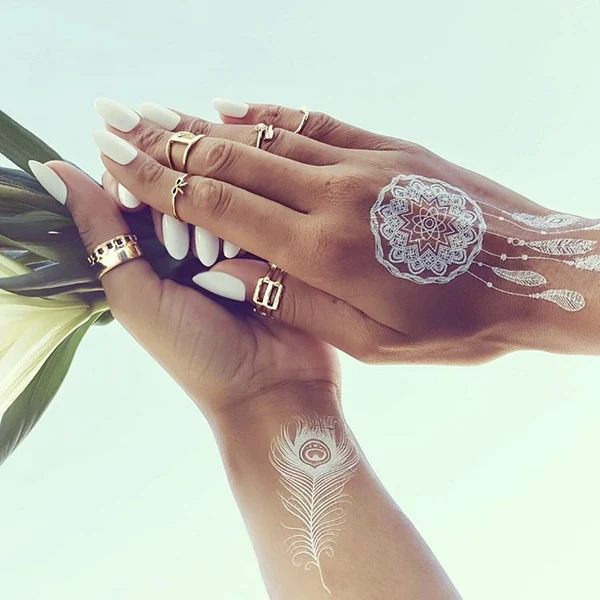
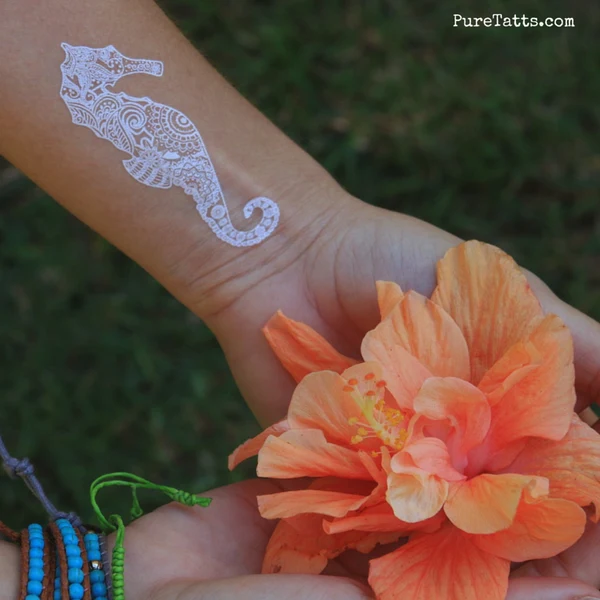
Pay attention to the character of each finish. Fine linework can feel delicate and intimate. Geometric tattoos often bring order and structure. Matte black designs create visual weight and can act as anchors within a larger arrangement. White tattoos offer a softer, unexpected detail, particularly on darker clothing or during evening events.
A tattoo story feels more intentional when the designs have a visual sequence. Think of the body as a page, pathway, or gallery wall. The first design may be the focal point, the next may expand its meaning, and smaller pieces can provide transitions between them.
Place the largest or most significant tattoo where it can be seen clearly. Follow it with medium-sized designs that echo its shape or theme, then use small accents to fill gaps without overwhelming the composition. A gradual change in scale usually looks more natural than placing several equally sized pieces together.
Direction matters as well. Designs that face toward one another can create a conversation, while elements aligned along the arm or collarbone can guide the eye. Curved artwork may suit the shoulder, hip, or rib area, whereas angular patterns often work well on the forearm, calf, or upper back.
Placement can add another layer of meaning. A design near the heart may feel private or sentimental, while artwork on the hands, wrists, or forearms can function as a visible signature. The back, thigh, and shoulder provide more room for a larger chapter in your visual narrative.
Think about movement and body shape before applying anything. A tattoo that looks balanced on a flat sheet may feel different once it follows the curve of a shoulder or wraps around an ankle. Leave enough breathing room between pieces so every design remains legible.
For inspiration, browse the best-selling temporary tattoos to see how different scales and motifs can work as individual statements or as part of a larger collection. You can also photograph your chosen designs and arrange the images over a body outline before committing to placement.
Personal meaning gives a tattoo story emotional depth, but visual appeal keeps the composition engaging. You do not need to explain every symbol. Some designs can carry a clear memory, while others simply support the mood through shape, texture, or proportion.
Try assigning each piece a role. A focal design might represent the main event or person. Supporting imagery can express related qualities, such as freedom, resilience, curiosity, or transformation. Small marks can serve as visual punctuation and help connect separate ideas.
Avoid choosing designs solely because they have similar meanings. A group of symbols can become visually repetitive if they all share the same silhouette. Combine open and dense shapes, organic and geometric forms, or detailed and minimal artwork to create variation within the theme.
Lay out the designs together in the approximate order and position you have in mind. Look at them from a distance, then inspect the details up close. A successful set should feel connected at both levels.
| Design role | Useful characteristics | Ideal purpose |
|---|---|---|
| Focal piece | Larger scale, distinctive silhouette, rich detail | Establishes the main theme |
| Supporting piece | Related motif, medium scale, complementary lines | Develops the visual narrative |
| Transition piece | Simple shape, repeated detail, flexible size | Connects separate designs |
| Accent piece | Small scale, high contrast, memorable symbol | Adds rhythm and emphasis |
Take a photo of the arrangement in natural light and review it later. This pause can reveal issues that are easy to miss while making spontaneous choices, such as too many dark areas, inconsistent orientation, or a gap that needs a smaller connecting element.
A temporary tattoo collection also gives you room to experiment with timing. You can apply the full story for a festival or photo shoot, then wear only the focal and accent pieces for a more understated look. This makes the narrative adaptable rather than fixed.
The strongest arrangement may develop gradually. Begin with two or three designs that clearly express your idea, then assess how they look together before adding more. This approach keeps the composition breathable and lets you discover which motifs deserve repetition.
Seasonal changes can influence the mood of your collection. Botanical designs may suit spring, celestial details can create an atmospheric evening look, and bold matte-black artwork can bring definition to minimalist outfits. The popularity of this finish is connected to its strong, modern presence, as explained in the matte-black trend.
Keep a small record of the designs you use, their placement, and the meaning behind them. Over time, this becomes a personal archive. You may notice recurring themes, preferred finishes, or visual patterns that can guide future additions.
A collection of temporary tattoos can become a portable form of storytelling: expressive enough to feel personal, flexible enough to change, and detailed enough to reward a closer look. Select designs that connect through mood and composition, test their placement, and let each new piece add meaning to the larger picture. Browse Pure Tatts to begin assembling a visual narrative that reflects your style today and leaves room for the next chapter.
Posted on
Posted on
Posted on

Posted on
Posted on
Posted on
Posted on