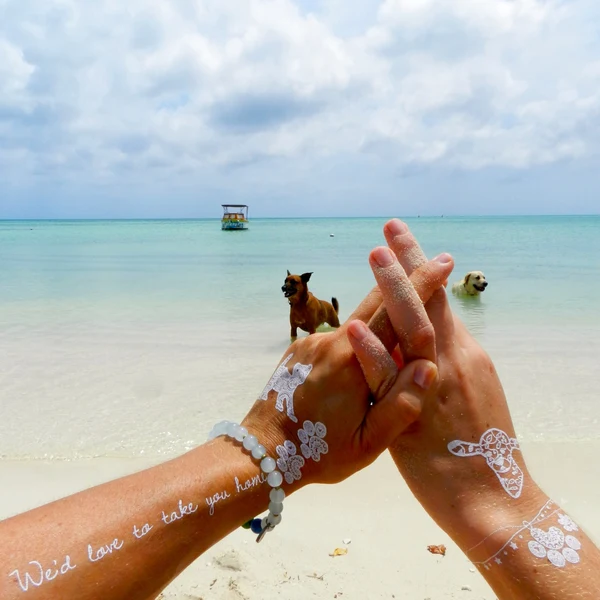
Temporary Tattoo Collection Donates 50% to Animal Rescue!
Posted on

Posted on
Posted on
Color influences how people read an image, but removing color can make a tattoo feel more deliberate. Black-and-white artwork depends on contrast, line quality, proportion, and empty space to communicate mood. Each detail carries more visual responsibility because there are fewer distractions competing for attention.
This restrained palette also connects with personal style. A monochrome tattoo can look bold without feeling loud, delicate without appearing overly decorative, or symbolic without explaining itself. For temporary tattoos, it offers a flexible way to explore identity, aesthetics, and self-expression before committing to permanent ink.
Pure Tatts develops premium black-and-white temporary tattoos around this idea. Its hand-drawn designs include geometric forms, matte black artwork, and white tattoo styles that work across different skin tones, outfits, and occasions.
The eye naturally notices differences in light and dark. Strong contrast helps an image appear crisp, focused, and easy to recognize, which is why black tattoo designs can make even a small symbol feel visually substantial. A dark line against bare skin creates a clear boundary, while a white design against deeper skin can produce a luminous, almost etched effect.
Contrast also affects emotional tone. Dense black areas may suggest confidence, mystery, protection, or intensity. Fine lines and open spaces can feel calmer, more thoughtful, or more refined. The same subject—a moon, animal, flower, or geometric shape—can communicate a different personality depending on how much black surrounds it.
This visual clarity is useful when choosing a temporary design for an event, photo, festival, or everyday outfit. A well-balanced monochrome tattoo remains legible from a distance while still rewarding a closer look at the artist’s details.
Black has long been associated with authority and permanence because it creates such a decisive visual mark. In contemporary fashion, matte black often carries a modern, architectural quality. It feels clean and intentional rather than ornamental, especially when the design uses angular geometry, symmetrical spacing, or solid silhouettes.
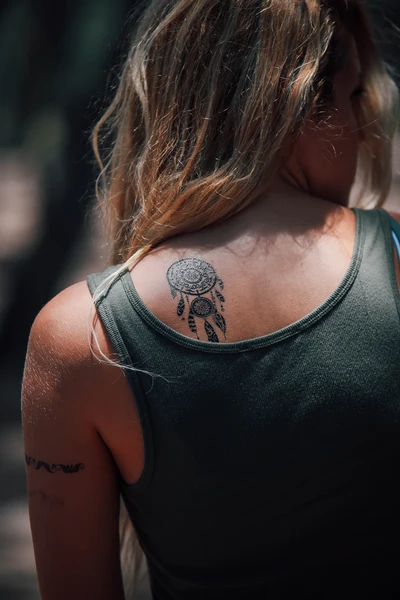
A matte finish changes the emotional effect further. Without a glossy surface, the image appears softer and more integrated with the skin. It can resemble charcoal, graphite, or a carefully printed illustration. For a closer look at this aesthetic, matte black styles show how a dark, low-shine finish can create an understated edge.
Black also supports visual storytelling. A raven, blade, mountain, or abstract eye may appear dramatic in heavy ink, while a small constellation or botanical outline may feel quietly symbolic. The psychology comes from the relationship between subject and treatment, rather than from the color alone.
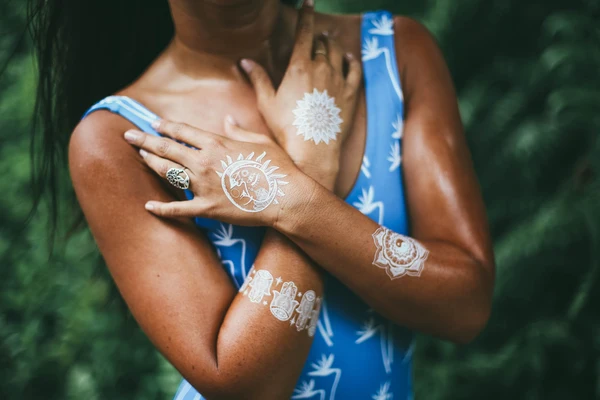
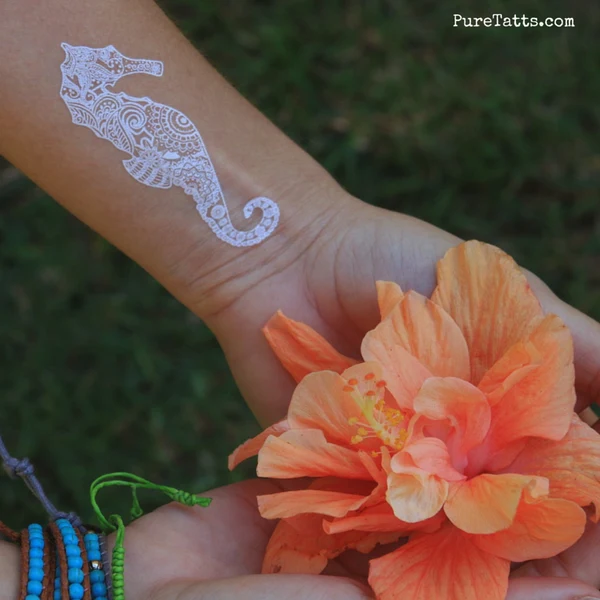
White tattoo designs use contrast in a different way. Instead of placing a dark shape over the skin, they rely on brightness, subtlety, and the viewer’s changing perspective. White ink can appear delicate and unexpected, making it a strong choice for people who want body art that feels personal rather than immediately prominent.
The surrounding skin becomes part of the composition. A white line may fade slightly at a distance and then become visible under certain lighting, creating a private or shifting quality. This can make the design feel more intimate, like a visual detail discovered rather than announced.
Negative space matters in both white and black artwork. Gaps between lines prevent a design from feeling crowded, preserve the shape of intricate patterns, and give the eye somewhere to rest. In geometric temporary tattoos, carefully measured spacing can suggest order and balance; in organic designs, it can create movement and breath.
A monochrome tattoo’s psychological effect depends heavily on its visual language. Fine-line work may suggest sensitivity and precision, while bold silhouettes feel more assertive. Repeated angles can communicate structure, and flowing curves may appear sensual, natural, or relaxed.
The table below shows how several common approaches can influence the impression of a design.
| Design approach | Visual qualities | Common emotional impression |
|---|---|---|
| Fine-line black | Precise, airy, detailed | Thoughtful, elegant, subtle |
| Matte black silhouette | Solid, low-shine, decisive | Confident, modern, intense |
| White linework | Bright, restrained, shifting | Private, delicate, distinctive |
| Geometric pattern | Balanced, repetitive, structured | Focused, composed, intentional |
| Botanical illustration | Organic, flowing, recognizable | Calm, expressive, connected to nature |
These associations are flexible rather than fixed. Personal memories, cultural references, and the placement of a tattoo can change its meaning. A small geometric mark on the wrist may act as a daily reminder, while the same pattern on the shoulder may function primarily as a fashion statement.
Hand-drawn detail adds another layer. Slightly organic lines can prevent a precise design from feeling machine-made, allowing the artwork to retain the character of the artist who created it.
Temporary tattoos offer a low-pressure way to test the emotional impact of a design. Placement, scale, and contrast can look different in real life than they do on a screen. Wearing the artwork for a day or several occasions helps reveal whether it feels natural with your movement, wardrobe, and routines.
This flexibility is particularly valuable for active lifestyles. A design can express team spirit, personal motivation, or a connection to a sport without the discomfort and long-term commitment of permanent ink. Pure Tatts explores this balance in its guide to temporary tattoos for athletes, where visual identity meets movement and performance.
Temporary body art can also support changing moods. Someone may choose a stark black symbol for a concert, a white botanical design for a summer gathering, or a symmetrical pattern for a styled photo. The ability to change the image makes self-expression more experimental and less tied to a single identity.
Placement changes how a black-and-white tattoo is perceived. A design on the forearm is visible during gestures and conversation, so it may feel expressive and social. Artwork near the collarbone, ribs, or ankle often feels more personal because it appears selectively. The same temporary tattoo can therefore shift from statement piece to private detail depending on where it is worn.
Context matters as well. Monochrome designs pair easily with patterned clothing because they do not introduce another color family. They can also complement minimalist outfits, silver jewelry, athletic wear, or formal styling. This adaptability makes black-and-white body art especially useful for people whose appearance changes across work, travel, events, and weekends.
Scale should support the design’s visual complexity. A highly detailed illustration may need enough surface area for its lines to remain distinct, while a simple icon can become more powerful when kept small. Good proportion preserves the intended psychological effect instead of allowing the image to become crowded or unclear.
The most compelling design is often the one that reflects how you want to feel, not simply how you want to look. Consider whether you are drawn to the certainty of matte black, the quiet presence of white ink, the order of geometry, or the warmth of hand-drawn organic forms. Each choice creates a different relationship between the artwork, your skin, and the surrounding world.
Explore Pure Tatts’ artist-led collections to find a temporary tattoo that fits your current mood and personal style. Choose a monochrome design, place it where it feels natural, and let the contrast become part of the way you present yourself.
Posted on
Posted on
Posted on

Posted on

Posted on

Posted on
Posted on