Temporary Tattoo Collection Donates 50% to Animal Rescue!
Posted on
Posted on
Posted on
A full sleeve look does not require a permanent appointment or a single oversized design. With careful placement, temporary tattoos can create the same visual rhythm as a connected arm piece while giving you the freedom to change the arrangement whenever your style shifts. The key is to think like a tattoo artist: establish structure first, then add detail, contrast, and movement.
A convincing temporary sleeve combines different scales and shapes. Large graphics act as anchors around the upper arm or forearm, while smaller symbols, lines, and decorative elements fill the spaces between them. When every piece has room to breathe, the result feels intentional rather than crowded.
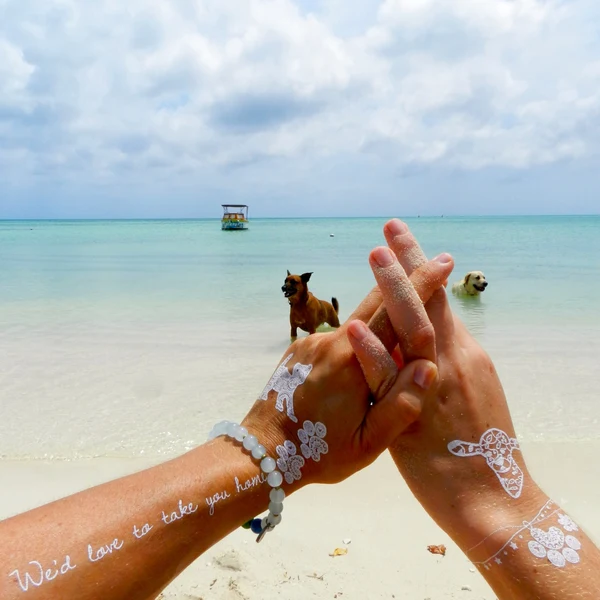
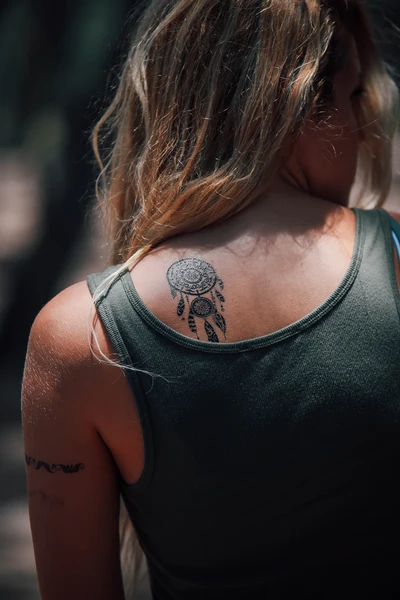
Black-and-white temporary tattoos are especially useful for this approach. Matte black designs provide weight, white tattoos introduce contrast, and fine geometric artwork can connect separate motifs. Browsing Pure Tatts’ hand-drawn tattoo insights can also reveal how line quality and artistic detail influence the finished look.
Start by deciding what you want the sleeve to communicate. A celestial arrangement might combine moons, stars, eyes, and fine-line geometry, while a botanical composition could use leaves, stems, insects, and ornamental curves. You can mix individual designs, but they should share at least one visual quality, such as similar line weight, symmetry, or subject matter.
Color is another way to create unity. A black temporary tattoo can serve as the dominant element, with white designs placed nearby as highlights. Alternatively, keep the entire sleeve monochrome and use differences in finish—matte, delicate, bold, or intricate—to create depth.
Avoid selecting every design at the same time without considering the arm as a whole. Lay the tattoos out on a table or photograph them together first. This makes it easier to spot repeated shapes, competing focal points, or gaps that will look accidental once the pieces are applied.
The first layer should contain the largest and most visually important designs. Place one anchor near the upper arm, shoulder, outer bicep, or forearm, depending on whether you want the sleeve to feel top-heavy or evenly distributed. A large central motif gives the eye somewhere to settle and makes the surrounding details appear connected.
Next, add medium-sized tattoos that guide the eye around the arm. These can follow the natural curve of the bicep, wrap slightly toward the inner arm, or create a diagonal path from shoulder to wrist. Leave enough skin between pieces to preserve definition, especially when the designs include intricate linework.
The final layer consists of small accents. Tiny stars, dots, arrows, ornamental marks, and miniature symbols can bridge awkward spaces without overwhelming the larger artwork. Place these details last so they respond to the composition instead of determining it too early.
Negative space is the skin visible between designs, and it is one of the most important parts of a temporary tattoo sleeve. Crowding every inch of the arm may seem like the fastest route to a fuller effect, but it can make individual tattoos lose their shape. Open areas create contrast and help detailed designs remain legible.
Use uneven spacing to make the arrangement feel organic. A narrow gap can connect two related motifs, while a wider area can separate major focal points. Try to avoid placing multiple tattoos at exactly the same distance from one another, as a perfectly measured layout may look stiff.
Consider the arm from several angles before applying anything. A design that looks balanced from the front may disappear when the arm turns sideways. The outer arm is highly visible and works well for bold shapes, while the inner arm can support more personal, delicate, or unexpected details.
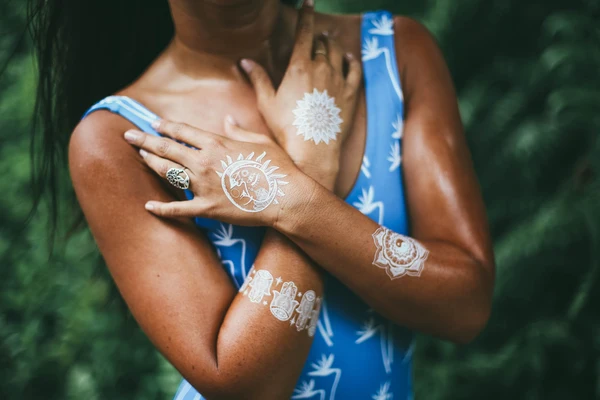
Contrast gives a layered sleeve energy, but consistency keeps it from looking random. Pair bold black graphics with fine-line pieces, then use white temporary tattoos as visual pauses against darker skin tones or beside black artwork. White designs can be subtle, so placing them near a strong black motif helps preserve their presence.
Geometric tattoos are useful connectors because their repeated angles and lines can echo shapes found in other designs. A triangle may repeat the point of a star, while curved linework can soften a group of sharper symbols. These visual echoes create cohesion without requiring every tattoo to belong to the same collection.
Pure Tatts’ featured tattoo collection is a useful place to compare styles, proportions, and finishes before building your arrangement. Look for designs that vary in scale but still feel compatible when viewed as a group.
Different parts of the arm call for different types of artwork. Broad areas support larger illustrations, while narrow or curved sections are better suited to vertical designs and slim geometric patterns. Placement also affects how much movement the sleeve has when the arm bends.
| Arm Area | Best Design Scale | Strong Visual Effect | Placement Note |
|---|---|---|---|
| Shoulder and upper arm | Large | Creates a main focal point | Follow the rounded contour |
| Outer bicep | Medium to large | Makes the sleeve visible from the front | Use bold silhouettes |
| Inner arm | Small to medium | Adds a discreet, personal detail | Allow for natural creasing |
| Forearm | Medium and vertical | Extends the composition downward | Align with the arm’s length |
| Wrist area | Small | Finishes the sleeve neatly | Keep details simple and clear |
Before transferring a tattoo, check how the design will look when your arm is relaxed, bent, and turned. Avoid placing the most delicate details directly across deep creases, where frequent movement may cause them to wear sooner. A temporary tattoo should follow the body rather than fight its natural lines.
Clean, dry skin provides the best surface for temporary tattoo application. Remove lotion, oil, and sunscreen from the area, then allow the skin to dry fully. If you have applied several products at once, wait until the surface feels completely free of residue before positioning the first design.
Use a damp cloth or sponge to press the transfer evenly against the skin, and avoid sliding the paper during removal. Once the tattoo is visible, give it time to dry before adding the next layer. Rubbing, tight clothing, and excessive moisture can shorten its wear time, particularly during the first few hours.
Layering should be planned, but it does not have to be permanent throughout the day. If a piece looks too close to another after application, let the area settle before deciding whether the composition needs adjustment. Temporary artwork makes experimentation part of the design process.
A full sleeve effect becomes more convincing when it includes one unexpected detail. This could be a white accent tucked beside a black illustration, a small symbol near the wrist, or a custom motif that reflects a meaningful interest. Personal details prevent the arrangement from feeling like a generic set of matching graphics.
For a more individual result, explore custom tattoo designs that can be integrated with existing pieces. A custom element does not need to dominate the sleeve; a small signature mark can be enough to make the entire composition feel distinctly yours.
When the placement is complete, photograph the sleeve in natural light from several angles. Save the arrangement as a reference for future applications, or change one section at a time to create a new version. Select your designs, map the arm, and apply the first anchor piece to start building a temporary sleeve that looks expressive, balanced, and entirely personal.
Posted on
Posted on
Posted on

Posted on

Posted on

Posted on
Posted on