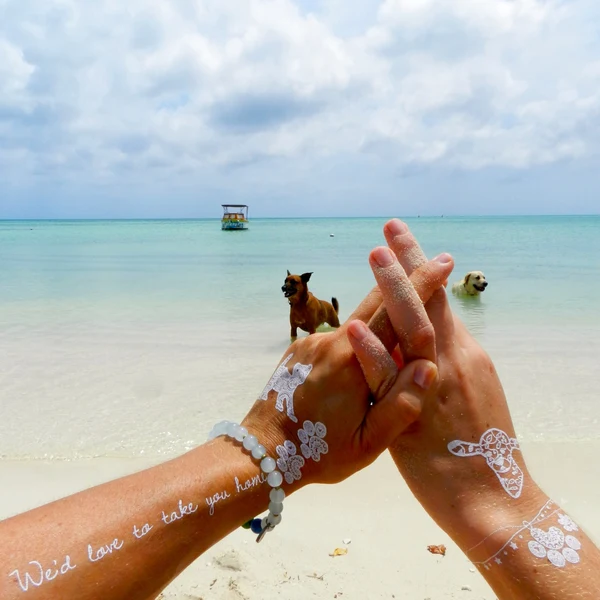
Temporary Tattoo Collection Donates 50% to Animal Rescue!
Posted on
Posted on
Posted on
Temporary tattoos have moved far beyond novelty-shop body art. Once associated with children’s party favors, novelty packaging, and summer souvenirs, they now appear in editorial styling, music performances, festival wardrobes, and everyday fashion. Their appeal lies in the freedom to change: a design can complement an outfit for one evening without becoming a permanent part of the body.
The evolution of temporary body art reflects wider changes in fashion. As clothing became more expressive and personal style became less dependent on fixed rules, skin became another surface for pattern, contrast, and storytelling. Black-and-white temporary tattoos, intricate linework, and artist-led designs have helped transform a short-lived accessory into a considered fashion detail.
Temporary body decoration has ancient roots. Across different cultures, people have used natural pigments, plant-based dyes, and mineral colors for ceremonies, celebrations, protection, and personal adornment. Henna is one of the best-known examples, with traditions extending across North Africa, the Middle East, South Asia, and other regions.
These practices were meaningful forms of cultural expression rather than fashion accessories in the modern commercial sense. Still, they established an important idea: the body could carry temporary visual language. Patterns could mark an occasion, communicate identity, or create beauty that was designed to fade.
In the nineteenth and early twentieth centuries, decorative transfers became increasingly familiar in Western consumer culture. Temporary images appeared on packaging, in novelty products, and as promotional items. Their connection to advertising would later help make tattoo transfers affordable and widely available.
The modern temporary tattoo gained momentum during the twentieth century, particularly through chewing-gum wrappers, toy promotions, mail-order products, and carnival merchandise. Children could apply colorful images with water, wear them for a short time, and remove them without the commitment associated with permanent tattooing.
By the 1970s and 1980s, temporary tattoos became part of pop culture. Bright motifs, metallic finishes, cartoon characters, and bold slogans appeared at parties and on beach holidays. They were playful and accessible, but they were rarely treated as serious fashion. Their temporary nature suggested fun rather than craftsmanship.
That perception began to shift as tattoos themselves became more visible in mainstream culture. Musicians, models, and actors helped normalize body art, while advances in printing allowed temporary designs to become sharper, subtler, and more varied. The transfer no longer had to imitate a permanent tattoo; it could function as its own category of wearable design.
Fashion’s interest in temporary tattoos grew alongside the rise of styling that treated the body as part of a complete visual composition. Designers and stylists began using body decals to echo garments, accessories, makeup, or a collection’s graphic language. A carefully placed mark could resemble jewelry, embroidery, lace, or architectural detail.
Temporary tattoos became especially visible in runway presentations, magazine editorials, music videos, and red-carpet styling. They offered a practical advantage: creative teams could test an idea, change it between appearances, or coordinate several people without permanent alteration. For performers, temporary body art could reinforce a character or stage identity.
The medium also benefited from changing attitudes toward personal appearance. People increasingly experimented with hair color, nail art, piercings, and removable fashion pieces. A temporary tattoo fitted naturally into this culture of controlled transformation, where individuality could be revised as often as a wardrobe.
The development of temporary tattoos can be understood through several broad stages. Each period expanded the purpose of body transfers, from inexpensive novelty to collectible artist merchandise.
| Period | Dominant Style | Place In Fashion |
|---|---|---|
| Early 1900s | Promotional transfers and simple illustrations | Commercial novelty |
| 1950s–1980s | Colorful characters, logos, and metallic motifs | Children’s products and leisurewear |
| 1990s–2000s | Tribal-inspired graphics and celebrity-led designs | Youth culture and pop styling |
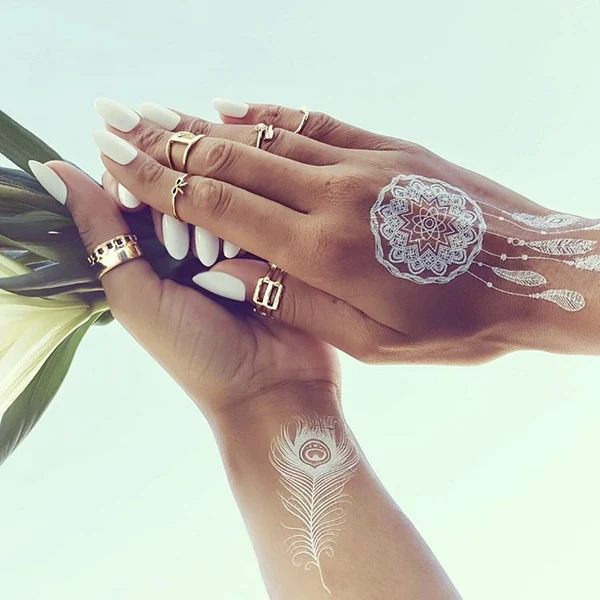
| 2010s | Minimal linework, white ink effects, and metallic finishes | Festivals, editorials, and social media |
| Today | Hand-drawn artwork, monochrome graphics, and limited editions | Personal styling and artist collaboration |
The visual language has become more sophisticated as consumers have become more selective. Fine lines, balanced negative space, geometric forms, and matte finishes can create an understated result. Instead of acting as a loud novelty, a temporary tattoo may now behave like a small piece of graphic design placed directly on the skin.
Digital printing and independent online retail have made it easier for illustrators to bring original work to a wider audience. This has encouraged a move away from generic stock imagery toward designs with recognizable artistic voices. Hand-drawn temporary tattoos can preserve the irregularity, texture, and personality of an original illustration.
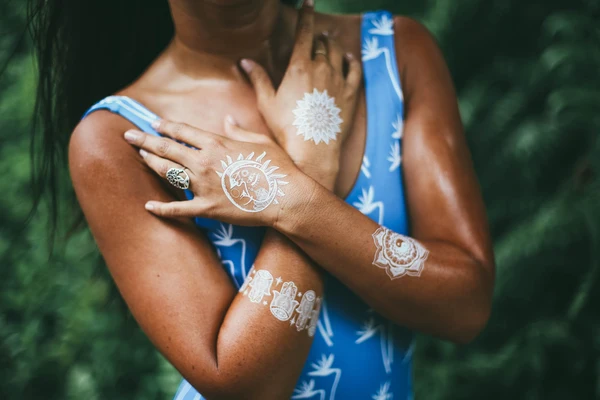
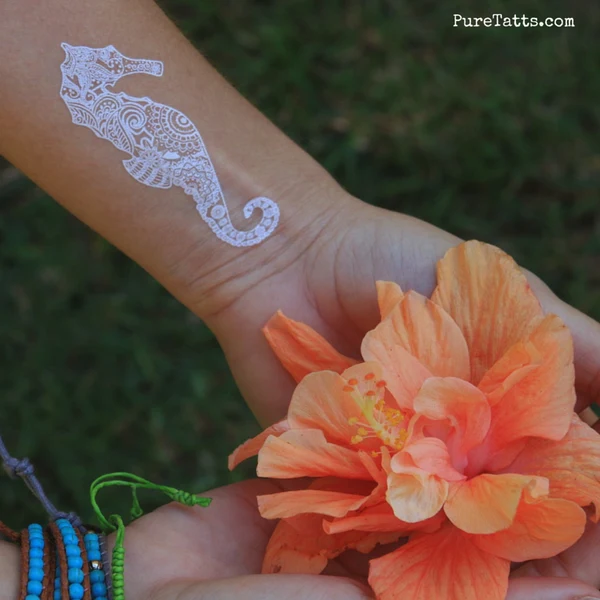
Limited releases have also changed how people value temporary body art. A seasonal drop or artist collaboration can feel closer to a print, accessory, or collectible than a disposable novelty. For those drawn to monochrome styling, a white artist edition can create contrast against darker clothing or offer a subtle design on the skin.
This shift has made temporary tattoos attractive to adults who want visual impact without permanence. A geometric design may complement minimalist tailoring, while a matte black motif can add definition to a simple outfit. The short lifespan becomes part of the appeal: the wearer can choose a design for a specific event, mood, or season.
Black-and-white temporary tattoos connect with fashion’s long relationship with contrast. Black ink is graphic and emphatic, while white designs can appear delicate, unexpected, or almost embossed against the skin. Together, these styles suit wardrobes built around neutrals, monochrome layers, clean silhouettes, and carefully chosen accessories.
The absence of color also places greater emphasis on composition. Line weight, spacing, symmetry, and placement become essential. A detailed botanical drawing, abstract symbol, or geometric pattern can be read clearly without competing hues. This makes monochrome body art versatile across different personal styles.
For shoppers interested in original artwork rather than mass-market imagery, limited hand-drawn designs bring an illustration-led quality to temporary styling. They can be worn as a focal point or used in a more restrained way alongside rings, watches, scarves, and other accessories.
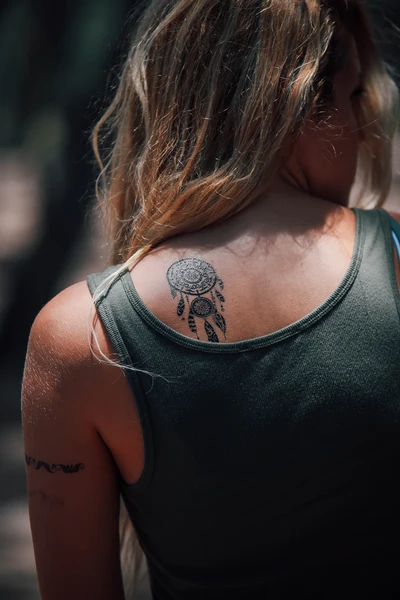
The most effective placement usually considers both the design and the garment. Wrists, forearms, shoulders, collarbones, ankles, and the upper back provide different visual effects. A narrow design may follow the line of a sleeve, while a larger graphic can work as an intentional centerpiece with a strapless or open-back look.
Skin preparation also affects the final appearance. Clean, dry skin without lotion helps the transfer adhere evenly. Avoiding areas that rub constantly against tight clothing can extend its wear. When removing a design, oil-based products or warm water can help loosen the image gently.
Temporary tattoos also offer a low-risk way to explore permanent tattoo ideas. They allow someone to assess scale, placement, and how a particular visual style interacts with daily clothing. At the same time, they remain complete fashion pieces in their own right, especially when selected as part of a seasonal look.
A temporary tattoo does not need to dominate an outfit. Thoughtful coordination can make it feel integrated rather than added at the last moment.
The strongest styling choices often leave room around the artwork. Simple clothing can give an intricate tattoo space to breathe, while a layered look may benefit from a smaller, more discreet mark. Placement, scale, and contrast matter as much as the image itself.
Temporary tattoos have traveled from ancient pigment traditions and promotional novelties into the vocabulary of contemporary fashion. Their history shows how a fading mark can still carry artistic value, personal meaning, and visual confidence. Browse Pure Tatts to find a design that suits your next outfit, event, or creative experiment, and make your skin part of the styling story.
Posted on
Posted on
Posted on

Posted on

Posted on
Posted on
Posted on