Temporary Tattoo Collection Donates 50% to Animal Rescue!
Posted on


Posted on
Posted on
Temporary tattoos make it easy to experiment with placement, contrast, and personal style without committing to permanent ink. When several designs are combined thoughtfully, they can look like one connected composition rather than a collection of unrelated decals.
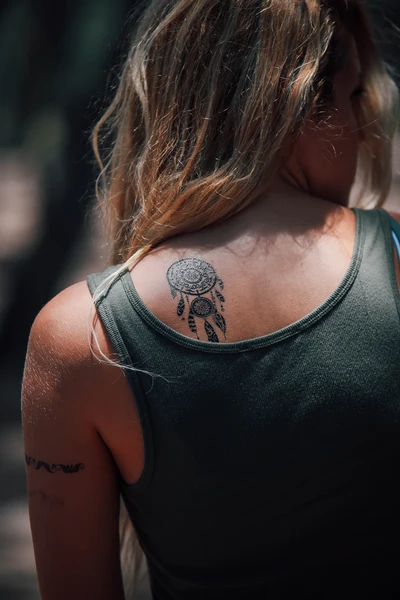
Black-and-white body art is particularly versatile for this approach. Fine geometric lines, matte black symbols, and white tattoo details can be arranged across the wrist, shoulder, collarbone, ankle, or back of the hand to create a look that feels intentional and distinctly yours.
The key is to treat each temporary tattoo as part of a visual arrangement. Consider scale, spacing, orientation, and finish before applying anything, then use the natural shape of your body to guide the final design.
Every layered tattoo arrangement benefits from a focal point. Choose one design to act as the anchor, then build around its strongest feature. This might be a bold geometric motif, a large botanical illustration, an abstract face, or a finely detailed central symbol.
An anchor does not have to be the largest tattoo in the set. A small design with unusual linework can draw attention when surrounded by simpler marks. Browse artist-made designs to find a piece with enough character to lead the composition while leaving room for supporting details.
Once you have chosen the main piece, identify two or three visual elements that can echo it. Repeated angles, similar curves, or a shared theme will help the finished arrangement feel cohesive. Avoid selecting several designs that all compete for attention.
A layered temporary tattoo look becomes more dynamic when the designs vary in size. Pair a medium or large focal tattoo with small dots, narrow lines, tiny symbols, or miniature geometric accents. This creates a sense of movement and prevents the placement from appearing crowded.
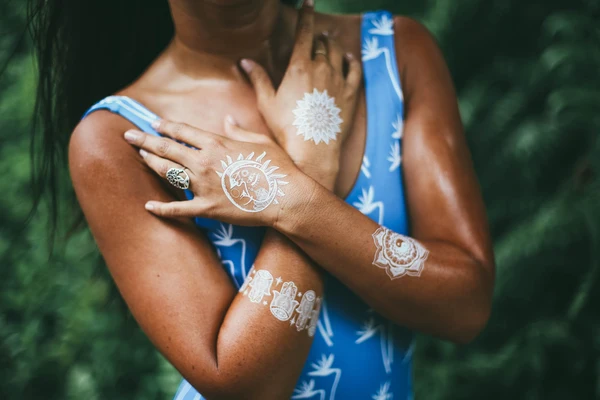
Finish matters as well. Matte black tattoos provide weight and definition, while white temporary tattoos create a softer, more unexpected detail. A white piece can sit beside a black design for crisp contrast, or it can be placed on its own against darker skin tones for a subtle, luminous effect. A white Christina design can work especially well as a lighter layer within a monochrome arrangement.
Think of each finish as having a different role. Black can establish the outline of the composition, white can highlight an edge or curve, and delicate linework can connect the two. Keeping the color palette restrained allows the artwork itself to remain the focus.
Temporary tattoos are easier to layer when you test the layout first. Place the unopened designs near the intended area and take a quick photograph from several angles. This helps you see whether the arrangement follows the body’s natural lines and whether the spacing looks balanced.
Use the structure of the placement to guide the direction. On an arm, designs can travel from the wrist toward the forearm in a gradual sequence. Across the collarbone, a series of small pieces can follow the curve of the bone. On the shoulder, different sizes can radiate outward from a central motif.
| Placement area | Strong layering approach | Best supporting details |
|---|---|---|
| Wrist and forearm | Progress from small to medium designs | Fine lines, dots, narrow symbols |
| Collarbone | Follow the natural horizontal curve | White accents and delicate shapes |
| Shoulder | Build outward from one focal tattoo | Abstract marks and geometric forms |
| Ankle | Keep the composition compact | Small black motifs and minimal lines |
| Back of the hand | Use limited, intentional spacing | Tiny symbols and high-contrast pieces |
Leave visible skin between the tattoos. Negative space gives each design definition and makes the full arrangement look more refined. If the pieces overlap too closely, intricate artwork can lose clarity and the temporary tattoo layer may appear heavy.
Balance does not require perfect symmetry. A more natural arrangement often combines a bold design on one side with several smaller details nearby. The visual weight should be distributed without making both sides mirror each other exactly.
Try alternating dense and open areas. A highly detailed tattoo can be followed by a simple line or single symbol, giving the eye a place to rest. This rhythm is especially effective when layering temporary body art along a limb or across the upper chest.
Orientation can also connect separate designs. Angle nearby pieces in the same general direction, or use curved motifs to lead the eye from one tattoo to the next. If every design faces a different way, the arrangement may feel accidental rather than curated.
Clean, dry skin gives temporary tattoos the best chance of transferring evenly. Remove oils, lotion, and sunscreen from the area, then let the skin dry completely. Applying tattoos after a shower can work well, provided the area is free from moisturizer.
Cut close to each design without trimming into the artwork. Hold the piece firmly against the skin, dampen the backing thoroughly, and wait according to the product instructions before lifting the paper. Avoid shifting the tattoo during transfer, since movement can blur fine details.
For a layered arrangement, apply the largest or most central design first. Let it settle before adding nearby pieces, particularly when the tattoos are close together. Once everything is dry, avoid rubbing the area and give it time to set before putting on tight clothing or accessories.
Seasonal collections and artist collaborations can make this process more interesting because they introduce fresh themes without requiring a complete change to your style. A new release may provide the missing accent for an arrangement you already wear, while a limited design can become the centerpiece of a special occasion look.
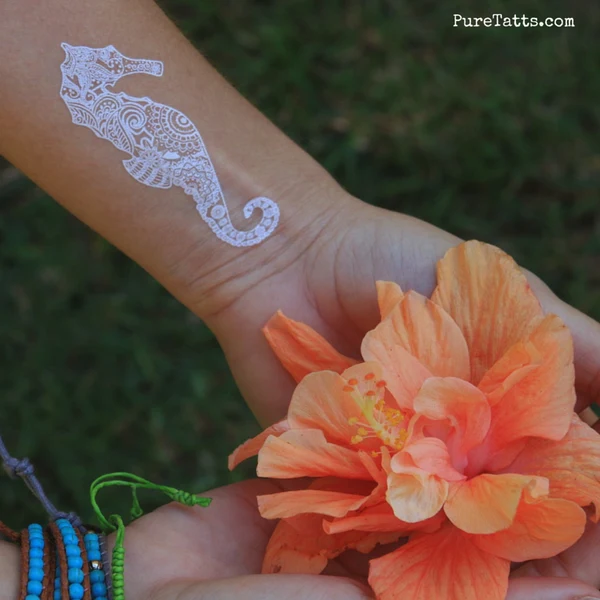
For a softer monochrome effect, use white tattoos as highlights rather than covering a large area. A design such as this Emily Deechaleune piece can add detail along the edge of a black tattoo or create a discreet second layer that appears differently under bright and low lighting.
Layering gives temporary body art the flexibility of styling rather than permanence. You can keep a carefully balanced composition for a weekend, rearrange it for an event, or try an entirely different placement when a new artist collection catches your eye.
Begin with a design that feels meaningful or visually exciting, then add only what strengthens it. Explore Pure Tatts collections, test combinations on your favorite placement, and build a custom temporary tattoo arrangement that reflects your mood, outfit, and individual sense of style.
Posted on
Posted on
Posted on

Posted on

Posted on

Posted on
Posted on